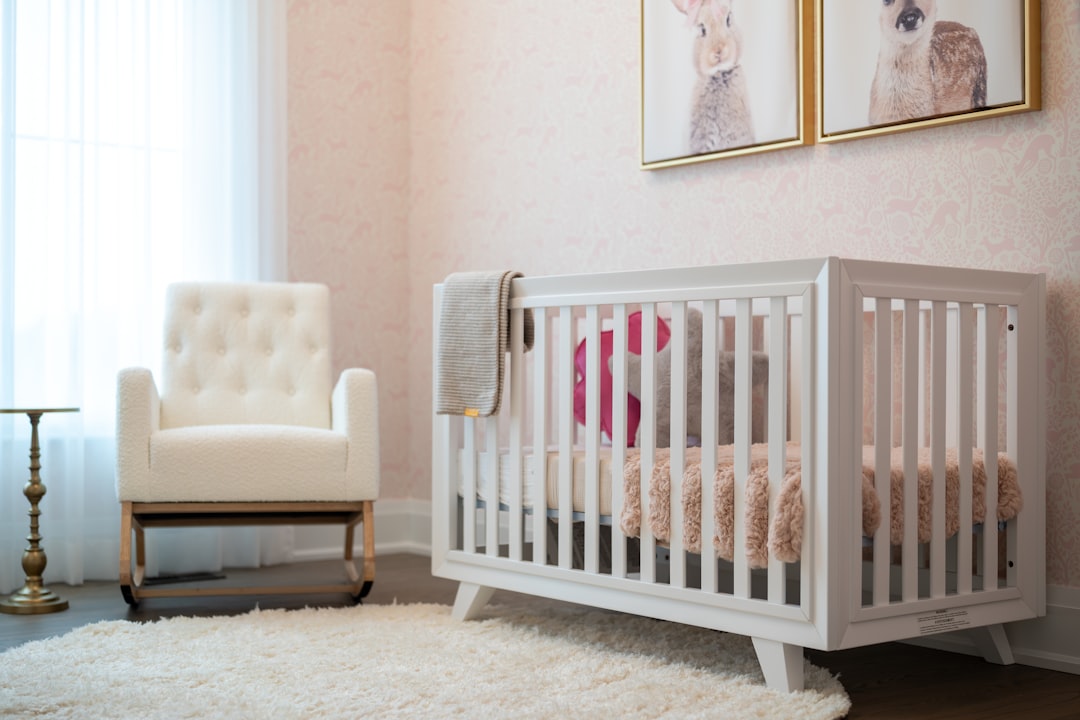
Somewhere around week three with my first, I stood over the bassinet at 3 a.m. watching that tiny chest rise and fall, absolutely certain something was wrong because she'd only slept ninety minutes. Nothing was wrong. That was just newborn sleep. Nobody had told me in plain terms what "normal" looked like, so I spent those early nights scared instead of just tired.
By my second — different country, different apartment, same 3 a.m. — I'd finally read the actual pediatric guidance instead of forum folklore, and it changed the nights more than any product did. None of this is medical advice. I'm a mom, not a pediatrician, and your baby's doctor gets the final word. But here's what I wish someone had laid out for me before that first 3 a.m.
Quick answer: Newborns sleep 14–17 hours a day in 1–3 hour bursts because their internal body clock isn't built yet, and most babies don't sleep in longer stretches until 4–6 months. In the first three months, the real goal isn't longer sleep — it's safe sleep (back, bare crib, room-sharing), a short bedtime routine, and catching sleepy cues early.
What "Normal" Newborn Sleep Actually Looks Like
The number that would have saved me the most panic: 14 to 17 hours a day total, almost none of it in one piece.
It arrives in 1- to 3-hour chunks, day and night, because a newborn hasn't developed a circadian rhythm yet. The clock that eventually says "night means long sleep" simply isn't built. That's not a feeding problem or a soothing problem you can fix. It's development on its own timeline.
Feeding drives a lot of the wake-ups. Breastfed babies typically wake every 2 to 3 hours; formula-fed babies often stretch a little longer, since formula digests more slowly. (If you want the feeding side of this timeline mapped out too, see .) And "sleeping through the night" usually doesn't show up until around 4 to 6 months at the earliest. For plenty of babies it's closer to a year.
Frequent night waking in months 0–3 is normal, not a failure of your technique. If a friend says her baby slept 8 hours at 6 weeks, believe her, and treat it as the exception rather than the benchmark. I lost a lot of nights feeling like I was doing it wrong because my kids didn't hit that mark early. My second slept in shorter stretches than my first. Same mom, same rules, different baby.
Wake Windows: The Newborn Sleep Cue I Didn't Know Existed
For weeks I did the exact wrong loop with my first. I'd wait for her to look tired, and by then she was past tired, screaming, impossible to put down. I thought she hated sleeping. She was overtired, every single time.
Newborns can only handle a shockingly small amount of awake time:
- 0–4 weeks: roughly 30–60 minutes awake, including the feed
- 4–12 weeks: roughly 60–90 minutes
That's a guideline, not a rule, and every baby runs a little different. But the number that reset my whole approach: most newborns hit their limit around 45 to 60 minutes awake, and the feed itself eats most of that. So "feed, change, cuddle a bit, then start winding down" isn't rushing. That is the window.
With my second I started watching the clock instead of waiting for the meltdown. Fed him, changed him, started the wind-down at about the 50-minute mark whether he looked tired or not. The difference wasn't magic. He still woke every couple of hours. But the fighting-the-bassinet screaming mostly went away.
The tell I learned to catch: the first yawn, the unfocused stare past my shoulder, the sudden fussing during a feed he'd been happy about thirty seconds earlier. Second yawn was already late.
Fixing Newborn Day/Night Confusion
My first had days and nights completely flipped for about two weeks. Dead asleep from 1 p.m. to 5 p.m. Wide-eyed and sociable at 2 a.m. It's incredibly common, and it makes sense. In the womb there's no daylight, so there's no reason to have sorted the two out yet.
What worked for us was boring and free:
- Daytime naps happen in daylight. I never tiptoed or blacked out the room during the day. Blinds open, TV at normal volume, my oldest being three in the next room.
- Night sleep is dark and boring. Lights off, no talking beyond a whisper, no eye contact games.
- Night feeds are transactions. Feed, burp, diaper if needed, back down. No chatting, no "hi baby," no phone screen. That last one was mine to fix, not his.
- Morning gets a marker. Around 7 a.m., blinds up, sunlight on his face for a few minutes. Even a gray Queens winter morning counts.
It took about ten days to shift. It didn't fix his sleep, to be clear. It just moved the long chunk to the correct half of the day, which is honestly the whole goal in month one.
Safe Newborn Sleep: The AAP Rules That Aren't Optional
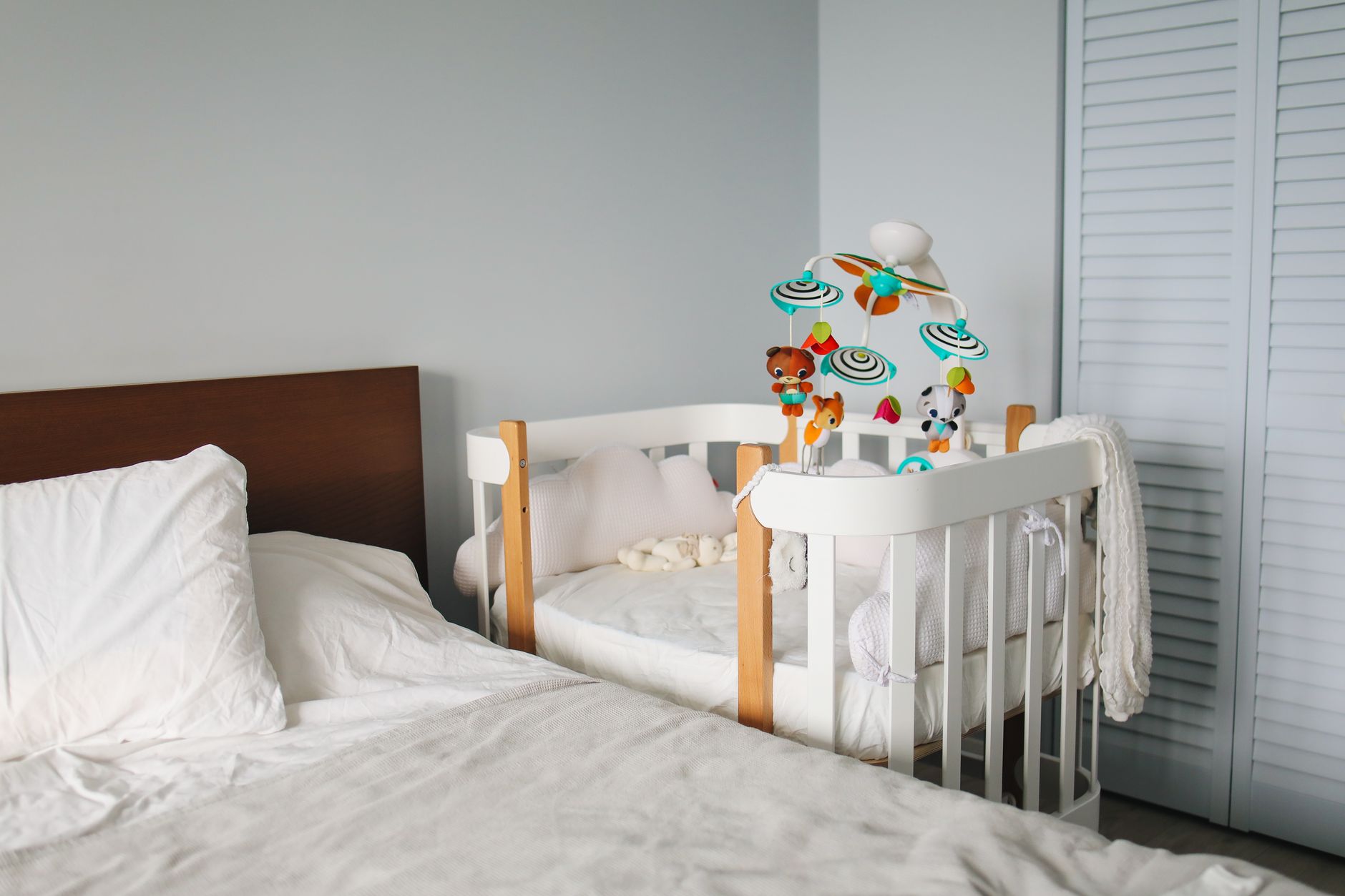
Everything else here is "what helped us." This part is different. It's what the American Academy of Pediatrics recommends for every baby, every sleep, and I'm not going to soften it or offer alternatives.
The five non-negotiables
- Back to sleep, every time. Every nap, every night, until age 1. Not just until they can roll.
- A firm, flat sleep surface. A crib or bassinet mattress made for that purpose, a tight-fitting sheet, nothing else. No inclined sleepers, no couch, no armchair.
- Room-sharing, not bed-sharing, ideally for at least the first 6 months. Baby's own crib or bassinet in your room, not in your bed. It can cut SIDS risk by up to half.
- Bare is best. No pillows, no loose blankets, no bumpers, no positioners or wedges, no stuffed animals.
- No routine sleep in car seats, swings, or carriers. Fine for the drive or the walk. Not the crib.
The first time I saw the "just a sheet and a baby" setup written out plainly, it felt wrong to me. My instinct was to make it look cozy. But "looks cozy" and "is safe" turned out to be two different categories, and I stopped trying to make them match.
Two "safer" products that aren't
Side-sleeping is not a safer middle ground. It gets pitched that way — just prop them on their side. A baby on their side can roll onto their stomach without the strength to get back, which is exactly the scenario back-sleeping prevents. There's no "on their side is basically fine" exception.
Sleep positioners and wedges — the foam inserts sold for flat head or reflux — are explicitly advised against. No proven benefit for either problem, and they add suffocation risk by design, since their entire job is holding a baby in one spot against something soft. If a product's main selling point is "keeps baby from moving," that's the feature to be suspicious of, not reassured by.
Rice cereal in the bottle: still no
An older relative suggested it to me, gently, twice. There's no evidence rice cereal in a bottle improves sleep, solids aren't recommended before about 4 months anyway and around 6 months is the current guidance, and it carries a choking and aspiration risk. I said no and I'd say no again.
Hip-Safe Swaddling (And the Part Nobody Mentioned)
My first swaddle looked like a burrito and I was proud of it. Tight, straight, arms pinned, legs wrapped snug. Turns out the legs are the part I got wrong.
Hip-safe swaddling means snug on the arms and chest, loose at the bottom. The hips and knees need room to bend up and out. Wrapping the legs straight and tight is linked to hip dysplasia risk. Think a bag around the legs, not a wrap.
Two more things:
- Always put a swaddled baby down on their back. Every time.
- Stop arms-in swaddling at the first sign of rolling, usually around 3 to 4 months, sometimes earlier. Not after the first roll. At the first sign — the rocking, the shoulder lifting, the almost.
We switched my son out of the swaddle at about 10 weeks because he started getting one arm free and shoving his shoulder over. Two rough nights, then he was fine. I'd been dreading it for weeks and it lasted less than a weekend.
White Noise, Room Temperature, and the Boring Environment Stuff
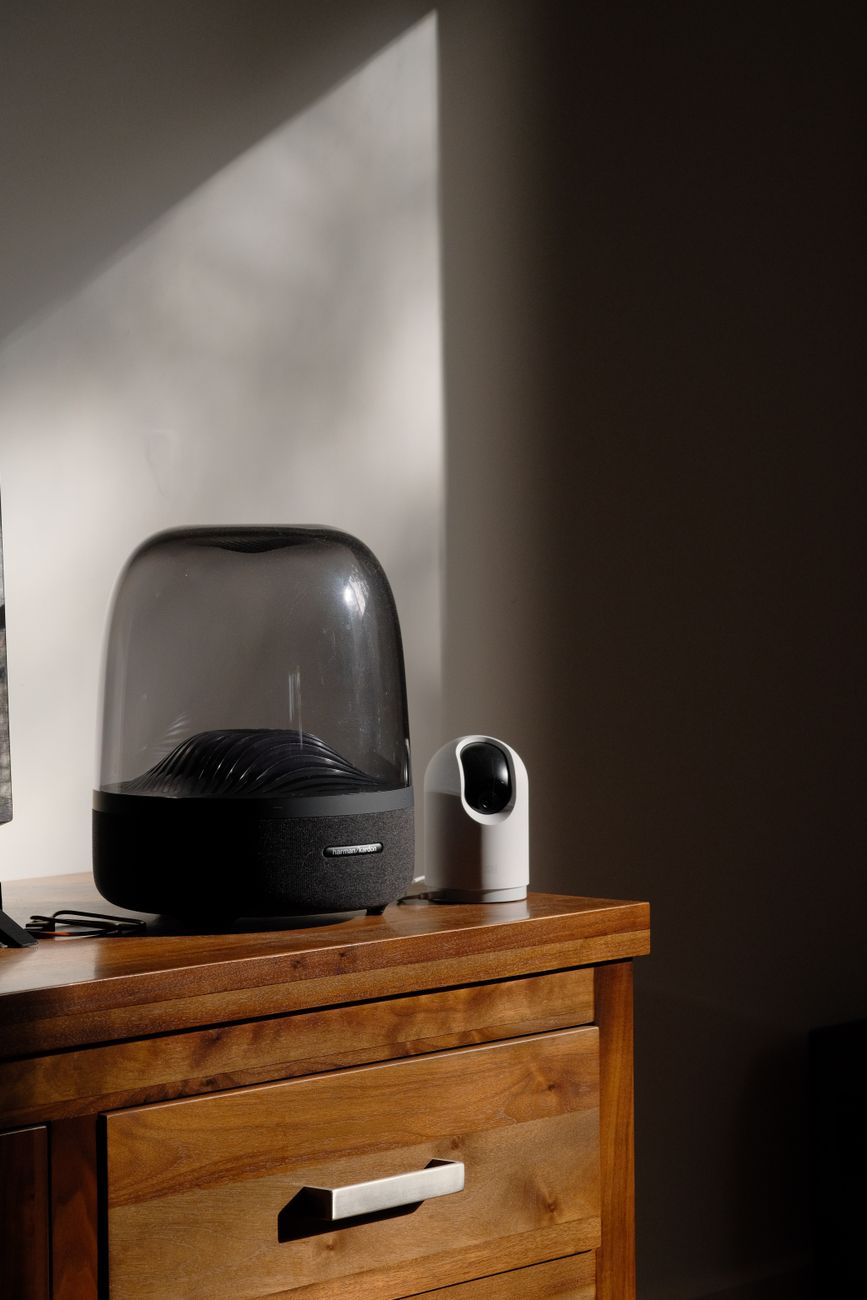
White noise was the single biggest lever for us, and I don't think that's unusual. In a two-bedroom apartment where the newborn shared our room and a toddler slept on the other side of the wall, it covered a lot of sins: the radiator clanking, the neighbor's door, my toddler deciding 6 a.m. was morning.
Two placement rules I follow and won't argue about. Keep the volume low rather than maxed, and put the machine across the room — on the dresser, not clipped to the crib rail, never inside the bassinet. Ours lived on the dresser on the lowest setting that still did the job. It's a tool for now, not something that has to run at full blast for years.
The shushing version works too, and it's free. Loud, close to the ear, matching the intensity of the crying and then easing off as they settle. I felt ridiculous the first time. It worked.
Room-wise: cool and dark. Comfortable for a lightly dressed adult is the usual reference. If you'd need a blanket, it's too cold, and if you're warm, so is the baby. This is where I had to fight my own upbringing hardest. In Korea, warmth is the instinct — the ondol floor, the extra layer, the deep worry about a baby getting cold. Our Queens radiator ran hot enough that I was overdressing him without noticing. One sleep sack over a onesie, no hat, no blanket, ended up being the right call.
Putting a Newborn Down "Drowsy But Awake" — Why It Took Weeks
Every list says put them down drowsy but awake. It's genuinely good advice. It also did absolutely nothing for me for the first six weeks, and I want to say that out loud, because I thought I was failing at a beginner move.
Here's the honest version: a brand-new newborn often just falls asleep on the boob or the bottle, and there's no technique that stops that. What eventually worked, around week 7 or 8:
- Feed until he was full but not gone. I'd unlatch at the first flutter-suck, the lazy one.
- Upright on my shoulder for a minute or two, one hand patting slowly.
- Down in the bassinet while his eyes were still doing that half-open thing.
- Hand flat on his chest for 30 seconds. Not patting. Just weight.
- Walk away before he was fully asleep, not after.
Half the time he woke up and I started over. That's not a failed attempt, that's just the ratio. And a hand on the chest for 30 seconds is a completely different thing from a hand under the head for 20 minutes. That's the whole trick, really.
The Chest-Nap Problem
Every parent lands here. He's finally asleep, on you, and it is the best you've felt all day.
The honest line is this: a baby sleeping on your chest is only safe while you are genuinely, reliably awake. At 4 a.m., on 3 hours of sleep, "I'll just close my eyes for a second" is not a plan, it's a coin flip. The danger isn't the chest. It's you falling asleep on a couch or an armchair with a baby on you, which is one of the highest-risk sleep situations there is.
What I did with my second, after nearly nodding off in the living room chair one night: chest naps happened during the day, on the sofa, with my oldest around and the TV on. Never at night, never alone. If I felt myself drifting, he went in the bassinet, awake and mad, and I lived with mad.
Solo Night Shifts: Newborn Sleep With No Partner Backup
Most articles tell you to split nights with your partner. Alternate feeds, take shifts, one of you gets a solid 5-hour block. Good advice, if you have that.
My husband works long hours. I didn't have that, and if you're the one running the home while someone else is out the door at 7 a.m., neither do you.
What actually helped
- The 8 p.m. handoff, not the 3 a.m. one. Instead of nights, he took the early-evening stretch on his days off — one wind-down and one bottle so I could go to bed at 8:30. Falling asleep at 8:30 feels stupid. It's also the only way I ever got a 4-hour block.
- One protected nap on the weekend. Not "rest when the baby rests," which is useless with a toddler in the house. One actual scheduled 90 minutes, door closed, phone off, both kids his problem.
- Lowering the bar on everything else, out loud. The apartment was a disaster for two months. I leaned on H Mart's freezer aisle more than I want to admit — mandu (Korean dumplings) and frozen bulgogi and a rice cooker running most of the day. In Seoul my mom would have moved in for a month and cooked. Here it was me and a freezer. I stopped pretending that was a personal failing and started treating it as the plan.
And the part nobody puts in a numbered list: sleep deprivation makes everything feel like proof you're bad at this. I cried in the bathroom more than once over nothing. A spilled bottle. A wrong-size diaper. That's exhaustion talking, and it lifts. But if the low feeling doesn't lift, or it's there even on the nights you did sleep, that's a real thing to bring up with your own doctor, not something to out-tough. I say that as someone who waited too long to mention it. (More on spotting the difference in .)
The "3-Month Sleep Regression" Isn't Really a Regression
Around 10 or 11 weeks my son got noticeably worse at sleeping, and I'd been primed by the internet to call it a regression and go looking for something to fix.
There was nothing to fix. Newborn sleep cycles run roughly 45 to 60 minutes, and babies surface between them; by around 4 months those cycles mature into the shorter 30-to-50-minute pattern adults would recognize. That's not a decline, it's the clock finally being built. It's the same maturing that eventually gives you longer nights. It just doesn't feel like progress while it's happening.
Naming it correctly saved me from about three weeks of trying new tricks on a baby who didn't need new tricks.
Building a Newborn Bedtime Routine Around the Rules, Not Tricks
Once the non-negotiables were locked in, the rest was repetition. The same short sequence every night: bath or a quick wipe-down, feed, swaddle if we were using one that week, sound machine on, lights off.
The order matters more than the clock time. A baby a few weeks old reads the sequence as a cue long before they can read a schedule. Ours ran about 20 minutes start to finish, and I kept it the same even on the nights it clearly wasn't working.
I never chased a strict schedule in those first two months. There's no fighting a newborn's actual rhythm — it's erratic by design. I kept the sequence consistent and let the timing be whatever it was going to be. (Same logic, different room of the house: I lean on the same small-consistent-sequence-beats-a-rigid-schedule trick for keeping the apartment running. More on that in Korean Cleaning Habits That Keep a Home Tidy Every Day.)
When the Advice Just Doesn't Work
Some nights none of it lands. My second had a stretch around weeks 4 to 8 of evening screaming that no wake window, no swaddle, no sound machine touched.
What I actually did, in order, when nothing worked:
- Put him down somewhere safe and walked away for 5 minutes. A crying baby on their back in an empty crib is safe. A parent past their limit holding a screaming baby is the situation to avoid. This one is permission, not a technique.
- Went outside. Stroller, 10 p.m., around the block. Cold air ended more meltdowns than anything in my apartment did. (Stroller is for the walk, not for the night's sleep. Back in the bassinet when we got home.)
- Stopped optimizing. Some nights the job was just getting through, and the sleep math could wait.
- Wrote it down and asked. Times, duration, what it looked like. If the crying is relentless and predictable, or there's a lot of arching and pain-crying around feeds, that's a pediatrician conversation. Colic and reflux are real and I'm not qualified to sort out which is which. Ours had answers. I should've called sooner.
The Bicultural Sleep Gap I Had to Sit With
This is where my instincts and the guidance actually pull apart, and I'd rather name it than gloss it.
In Korea, floor-sleeping on a heated ondol floor, often with a soft mat and thicker bedding nearby for warmth, is a long-standing setup, including for babies in a lot of households. I'm not going to pretend that image doesn't feel warm and familiar. It's how I picture home.
But a soft, padded surface with extra bedding is exactly what the firm-surface, nothing-in-the-crib guidance is built to move away from. So I didn't try to blend them. Plain bassinet, tight sheet, baby on his back, even on the nights it felt colder and less loving than what I grew up around. Some habits cross an ocean easily. This one didn't, and I decided that was fine. (It's the same push-and-pull I felt sorting which Korean parenting habits to keep and which to adapt. I wrote about that in Korean Table Manners for Kids: 7 Chopstick Rules Explained, and about which Korean baby gear was actually worth shipping over in .)
FAQ
How do I fix newborn day/night confusion? Make days bright and noisy — naps happen with the blinds open and normal household sound. Make nights dark, quiet, and transactional: feed, change, back down, no talking or eye contact. Get some morning light on them around the same time daily. It took about 10 days for us. It doesn't create longer sleep; it moves the long stretch to nighttime.
When should I worry my newborn won't sleep? Waking every 1 to 3 hours is normal through month 3 and isn't a red flag. What's worth a call: poor weight gain, fewer wet diapers than expected, a baby too sleepy to wake for feeds, relentless inconsolable crying, or pain-crying and arching around feeds. Call your pediatrician. I've called ours over smaller things and it was never a wasted call.
Is it safe to let a newborn sleep on my chest? Only while you're genuinely awake and alert. The real risk is you dozing off, especially on a couch or armchair, which is one of the most dangerous sleep setups there is. For any sleep you might sleep through, they go in their own crib or bassinet, on their back. I kept chest naps to daytime, on the sofa, with other people around.
How long does newborn sleep deprivation last? The hardest stretch for both of mine was weeks 2 through 8. Things loosened up noticeably around 3 months, and most babies don't consolidate real night sleep until 4 to 6 months. It's genuinely long. It also genuinely ends. I could not feel that at week 5, and it was still true.
Can I put cereal in the bottle so my baby sleeps longer? No. There's no evidence it improves sleep, solids aren't recommended before about 4 months and around 6 months is the current guidance, and it adds a choking and aspiration risk. Someone will suggest it kindly. You can decline just as kindly.
When to Actually Call the Pediatrician
None of this replaces your own baby's doctor, and I don't mean that as a throwaway closing line. Ask at a well-visit about your baby's rolling milestones, your room setup, your feeding schedule, and whether the wake-up pattern you're seeing is in range.
The AAP guidelines are the floor everybody should be standing on. Your pediatrician is the one who adjusts for the baby actually standing on it. Bring your list. Mine has never once made me feel like I asked a dumb question.
If 3 a.m. feels a little less bleak with something warm waiting for you the next day, that's basically the whole idea behind Air Fryer Korean Recipes with Grocery-Store Ingredients — real dinners in under 20 minutes for the nights you have exactly one free hand.