My kids hit me with the stomach bug on the same day last winter, and by mid-afternoon I walked into the kitchen and honestly couldn't tell you what was on the counter. Crackers, probably. Some kind of juice incident, definitely. And the first thing my hands did — without asking my brain — was start at the top and work down to the floor. That's my mother's voice, installed in me like firmware. Ten minutes later the kitchen was livable. Not pretty. Livable.
That's the standard I actually keep, and it's nothing like what most cleaning content tries to sell you.
Quick answer: Korean homes stay clean through daily upkeep, not weekend deep-cleans. Shoes off at the door, windows open for 10 minutes each morning, counters wiped the second cooking ends, floors passed daily, and no dishes in the sink at night. It runs about 25 minutes a day and replaces the 3-hour Saturday scrub entirely.
Back in Korea, I watched my mom clean all the time but never dramatically. There was no Saturday meltdown because nothing ever got bad enough to require one. It was just upkeep. Maintenance. That idea followed me to this Queens apartment, where two kids and a full life produce mess at the pace of a small weather event.
So here's what I actually do, hour by hour, in a small two-bedroom with no utility room and no pantry.
My Actual Day, By the Clock
I timed this over a normal week because I got curious whether it was really as light as it felt. It was. Here's the whole thing.
| When | What | Minutes |
|---|---|---|
| 6:50 am | Open two windows, make beds, put shoes on the rack | 4 |
| 8:15 am | Start one small laundry load, wipe bathroom sink | 3 |
| After breakfast | Counters + sink wiped, table down | 3 |
| Right after dinner cooking | Stovetop and backsplash while still warm | 2 |
| 7:30 pm | Fold that morning's laundry | 4 |
| 8:40 pm | Ten-minute lap: gather, wipe, dishwasher on, floor pass | 10 |
That's 26 minutes on a busy day, and honestly a good chunk of it happens while I'm waiting for water to boil. Compare that to the three-hour Saturday I used to lose, resentfully, while everyone else was at the playground.
The trade you're making is real: you give up the feeling of being "done." Nothing is ever finished. But nothing is ever a disaster either, and I'd take that deal a hundred times.
6:50 AM: Open the Windows First
This is the one I'd fight for if I could only keep a single habit. Before coffee, before anything, I crack two windows on opposite sides of the apartment for about 10 minutes — kitchen and the far bedroom — so air actually moves through instead of just sitting there.
In Korea this is called hwangi (환기), and my mom did it in January with snow on the sill. I thought she was insane as a kid. Now I do it in a Queens winter and the heat brings the place back fast enough that I stopped worrying about it.
Why it matters more than it sounds: overnight, an apartment full of sleeping people gets damp. Dampness is what turns dust into grime and bathroom corners into mildew. Ten minutes of cross-breeze resets the whole thing, and it costs nothing.
If your windows don't open onto anything useful, run the bathroom fan and the kitchen hood together for 15 minutes. Not as good. Much better than nothing.
The Morning Reset: Two Minutes That Change the Whole Day
Before anyone heads out the door, I do one fast loop through the main rooms. Not cleaning — resetting. Cushions up, blanket folded, cups carried back to the kitchen, the shoes that got kicked off actually placed on the rack instead of left where they landed.
In Korea the entryway, the hyeongwan (현관), gets treated almost like a threshold you don't violate. It's usually sunken a few inches below the floor level of the rest of the home — a literal architectural line between outside and inside. Outdoor shoes stay on the low side. They don't track through the house.
This isn't fussiness, and it's the part most articles get wrong. It's downstream of how Korean homes are built and lived in. More on that below, but the short version: when your floor is also your couch, your dining table, and sometimes your bed, the floor has to be clean the way a counter has to be clean.
My mom never needed a study to tell her this. I didn't either, really — I just needed year one here, when I was still being polite about asking guests to take their shoes off, and my floors felt gross by Wednesday.
If you can fit a small bench or shoe rack by your front door and actually use it, you've cut your floor-cleaning in half before you've cleaned anything.
Why Korean Homes Are Built Around the Floor
Here's the mechanism, because I think it's genuinely the missing piece in most explanations of "why are Korean homes so clean."
Korean homes have ondol (온돌, literally "warm stone") — radiant underfloor heating, a system with roughly a 2,000-year lineage. Traditionally, flues carried smoke and heat from a cooking fire through channels under the floor. Modern apartments do the same job with hot-water pipes running under the floor surface.
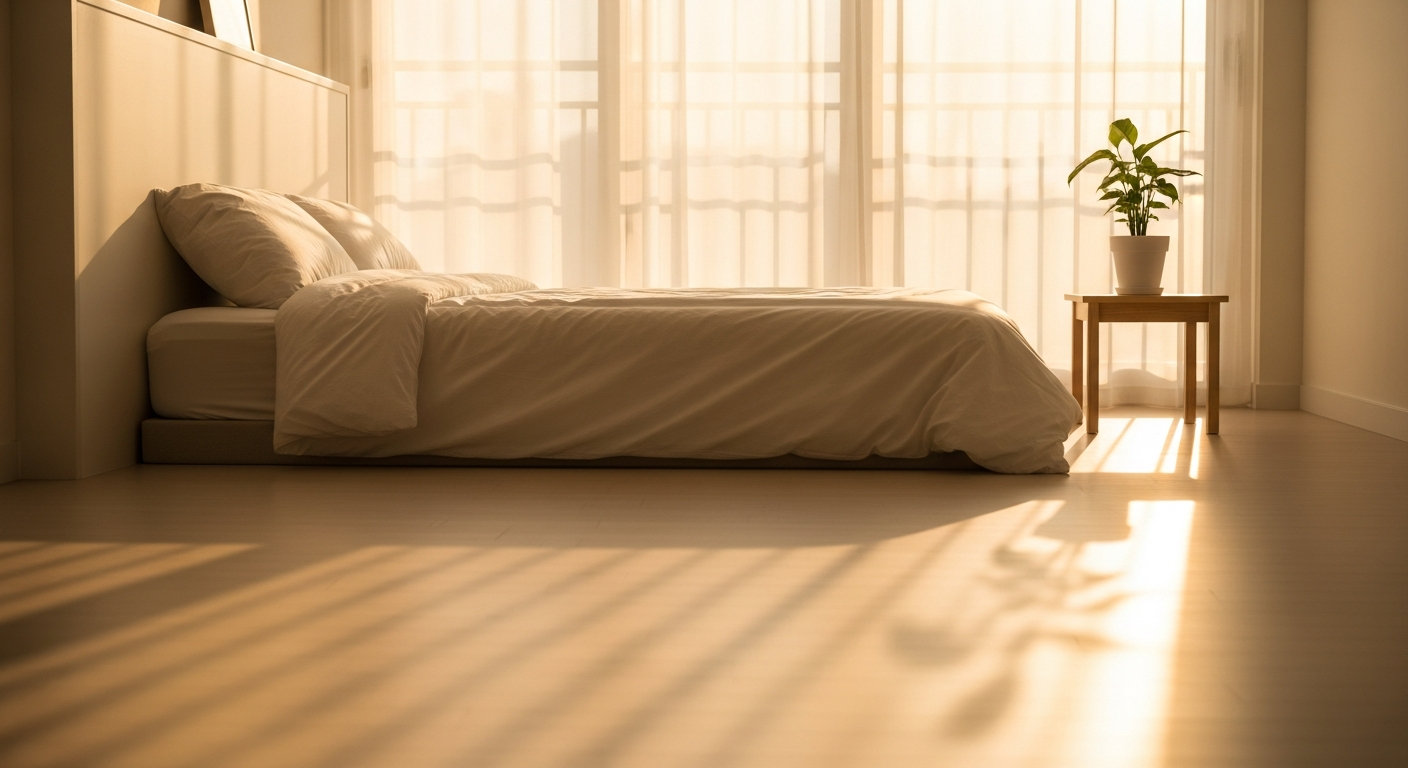
Heat comes up from underneath. So you sit on the floor. You eat at a low table, a bapsang (밥상), sitting on the floor. Historically you unrolled a mat, a yo (요), and slept on the floor. The warmest, most comfortable place in the house is the floor.
Now flip it. A Western home is heated by air blown in from vents, so you buy furniture to sit on and carpet to keep your feet off a cold floor. The floor becomes the place dirt goes. In Korea, the floor is the place you go.
That's why the daily sweep-and-wet-mop — mulgeolle (물걸레), literally a wet cloth — is standard rather than obsessive. My mom did it on her hands and knees with a folded rag for years before she gave in and bought a mop. My generation mostly uses a wet-mop robot vacuum, and I want to be clear this isn't a stereotype — Samsung sells a vacuum-and-mop combo here in the US, and Roborock, Dreame, and Ecovacs are everywhere. They're in Korean homes for exactly this reason.
You don't need ondol floors to steal the logic. You need to decide the floor counts.
A Cloth and a Spray in Every Room
I gave up on the one-cabinet-under-the-sink system years ago. Now there's a small basket in the bathroom and one in the kitchen, each with a microfiber cloth and a spray bottle.
What I Actually Use to Clean
In the kitchen I mostly use diluted white vinegar — a cup of vinegar to a cup of water. It's what my mom used, it costs basically nothing, and it knocks out odors, soap scum, and light residue without leaving anything behind. I'll be honest: it's not a real degreaser. For actual cooked-on grease you need something with more muscle. And keep it away from stone counters — vinegar etches marble and eats away the sealer on granite, which opens the pores up to stains. I learned that at a friend's place, not my own, thank God.
In the bathroom I keep a gentle daily shower spray going so mildew never gets a foothold. When the supplies are where you already are, wiping a counter is 30 seconds instead of a whole errand.
Wipe the Stove While It's Still Warm
This is the single highest-return two minutes in my kitchen, and I resisted it for years.
Korean cooking splatters. Anything involving gochujang, sesame oil, or pan-fried anything throws a fine mist onto the stovetop and backsplash. When it's warm, that mist comes off with one damp cloth and zero product. When it's cold and it's been there since Tuesday, it's a polymerized film and you're going in with a degreaser and your forearm.
So: burner off, food plated, cloth in hand while the pan is still ticking. Stovetop, backsplash, the front of the range hood. Two minutes.
My apartment kitchen has maybe 3 feet of usable counter, so grease isn't an aesthetic problem here — it's a space problem. Sticky counter means less counter.
Never Go to Bed With a Dirty Sink
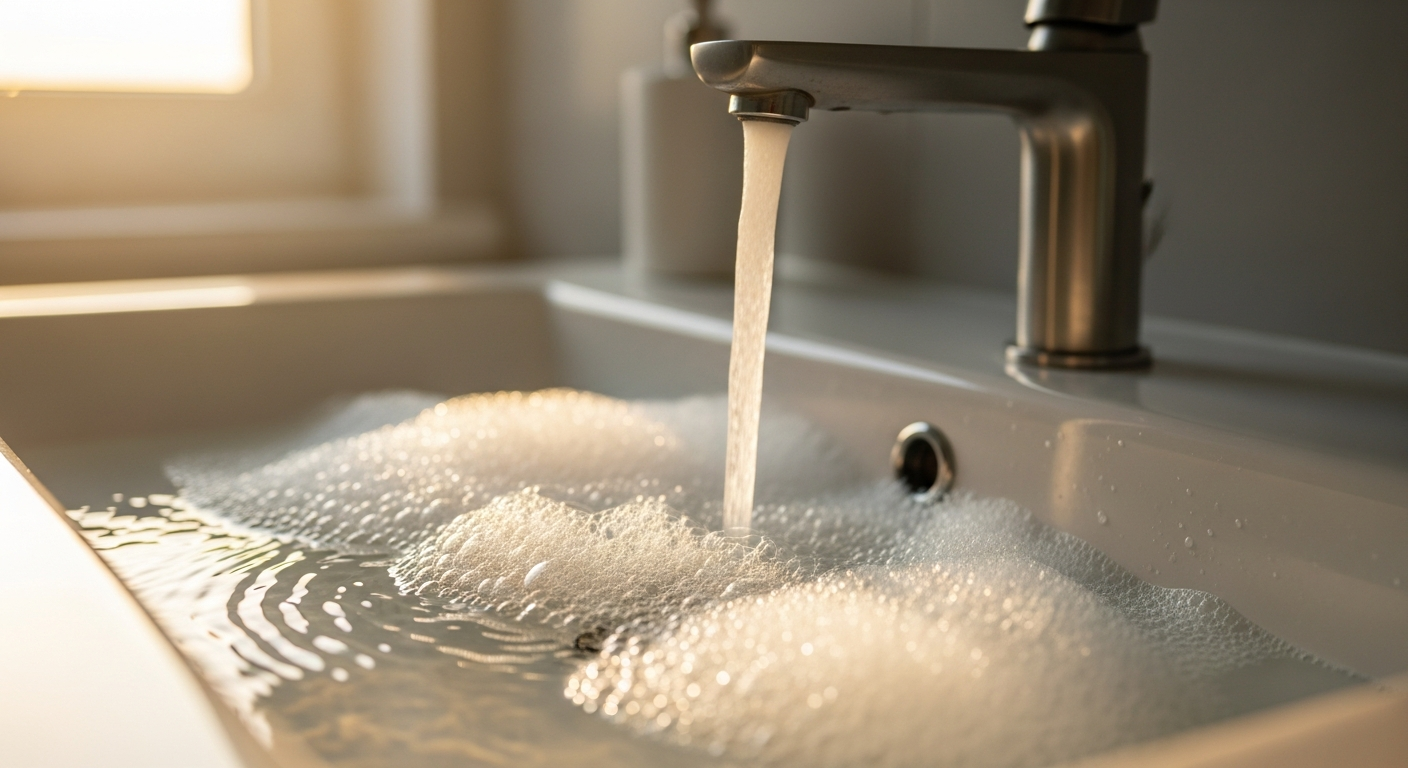
This one's non-negotiable in my house. In a lot of Korean homes, leaving dishes in the sink overnight is just unthinkable — the sink is the face of the kitchen. I'm not precious about it, but the rule stands: no dishes in the sink when I turn off the lights.
Even if everything went into the dishwasher filthy, the sink itself gets a quick wipe. I'll sometimes use Bar Keepers Friend on a sponge for the stubborn spots — it's a mildly abrasive cleanser, oxalic acid, so you rinse it off fast and don't leave it sitting. I wouldn't use it every single day on every finish or you'll dull the metal.
A clean, dry sink makes the whole kitchen read as clean even when it absolutely isn't. That's not a trick. That's just how eyes work.
The Bathroom: Squeegee, Then Walk Away
Korean bathrooms are usually fully wet rooms — tiled floor, a drain in the middle, water goes wherever. Mine in Bayside is a standard American tub-and-tile setup with a mat and no floor drain, so I had to adapt.
What carried over is the squeegee. It hangs inside the shower on a suction hook. Last person out pulls it down the tiles and the glass — 20 seconds, maybe 30.
Mildew needs standing moisture. Remove the moisture, remove the mildew, and you never have to buy the aggressive stuff. In Korea people reach for mold-removal sprays for grout lines (곰팡이제로 is the one my mom keeps under her sink — you spray it, wait, wipe it off); here I mostly haven't needed an equivalent since I started squeegeeing, which is either luck or evidence, and I suspect evidence.
If you rent a small apartment with a windowless bathroom, do this one first. Squeegee, then leave the door open and the fan running for 20 minutes. That's the whole prevention plan.
Floors: Little and Often Beats Once a Week Every Time
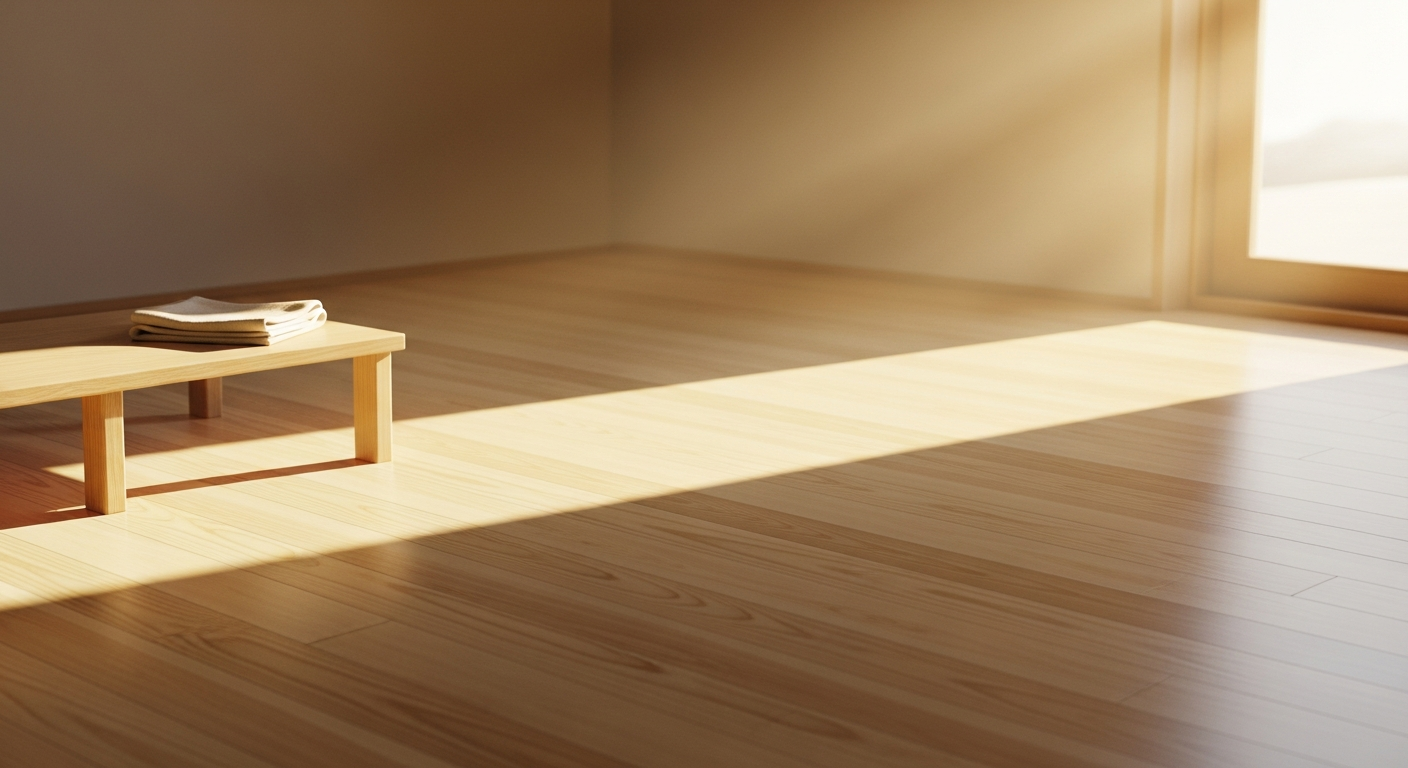
I vacuum or dry-mop the high-traffic strips every day — hallway, kitchen, living room. Five-minute pass with a cordless stick vacuum or a dry microfiber mop, and done. I do not move furniture. I do not get the corners. The corners get theirs on the weekend.
Wet mopping is twice a week in the kitchen, once a week everywhere else, just a capful of Pine-Sol in warm water. Nothing elaborate.
The reason this beats a weekly deep clean isn't effort math — it's that dirt on a floor gets ground in by feet. Grit that sits for six days becomes a scratch and a stain. Grit that sits for one day is just grit, and it lifts right off.
Do Laundry Like You Do Groceries
Korean households tend to do small, frequent loads rather than one weekend mountain. I run a little load most mornings and fold it the same day, and it never becomes the laundry pile that haunted my first couple of years here.
Hanging mesh bags help — one in each closet so sorting just happens passively instead of accumulating on the floor.
The other reason this is a Korean default: apartments there often have a small washer on an enclosed balcony and no dryer, so clothes air-dry on a rack. A giant load simply won't fit on the rack. The constraint enforces the habit. I have an in-unit dryer here and I still do small loads, because I've learned that the size of the pile determines whether I can face it.
Jeongdon Is Not the Same Thing as Cleaning
There's a word I use constantly that doesn't have a clean English equivalent: jeongdon (정돈). It means putting things in their proper order — putting away, arranging, restoring.
Cleaning is removing dirt. Jeongdon is returning things to where they belong. They're different jobs, and here's the part that took me years to see: jeongdon has to happen first, or cleaning is impossible.
You cannot wipe a counter covered in mail. You cannot mop a floor covered in Lego. Most people who say "I don't have time to clean" actually don't have time to jeongdon, and so the cleaning never even gets a chance to start.
This is why my ten-minute night lap starts with a laundry basket and not a spray bottle.
The Last Ten Minutes Before Bed
Every night, once the kids are down, I do a final ten-minute lap. I carry a small laundry basket and gather up everything that wandered: toys, jackets, cups, that one shoe forever stranded alone in the hallway. Then wipe the counters, flip the dish towel, start the dishwasher, swipe the bathroom sink, and take a quick pass with the vacuum.
It's such a small thing. But I wake up to a home that feels on purpose, and that does more for my head than I can really put into words.
The Trash Habit I Miss (and the One I Don't)
Worth knowing, because it shapes how Korean kitchens run: Korea banned landfilling food waste back in 2005, and since 2013 households have had to buy special biodegradable food-waste bags — 음식물 쓰레기 봉투 — that get weighed or scanned, with RFID bins in a lot of districts. You pay by weight. Food waste is around 30% of the country's total waste stream, and over 90% of it gets separated and turned into compost, animal feed, or biomass.
The nuance that trips up every newcomer, including me on visits home: potato peels are food waste, but onion skins, bones, shellfish shells, and tea bags are general waste. My mom has corrected me on the tea bags more than once.
What it does to a kitchen is real. When scraping a plate costs money, you cook to the portion and you deal with the container daily instead of letting something fester in the bin. I do keep the daily-emptying part here in Queens, mostly because the trash room is a hike from our door and I'd rather make one trip than live with the smell.
I don't miss paying for garbage bags. I do miss that the system worked.
The One Thing I'd Put in Every Single Room
Microfiber cloths, bought in bulk. I get the 24-packs, stash them everywhere, and toss them in with the regular wash. They've replaced paper towels for almost everything, they clean with barely any product, and they're about as close as I can get to what Korean moms have used forever: a clean cloth, a little effort, and the quiet belief that a tidy home is a daily practice, not a weekend punishment.
Maintenance over marathon. That's the whole thing.
Frequently Asked Questions
Why are Korean homes so clean?
Mostly because of the floor. Korean homes are heated by ondol — radiant underfloor heating with a roughly 2,000-year history — so people traditionally sit, eat at a low table, and sleep directly on the floor. When the floor is furniture, keeping it clean is basic hygiene rather than a preference. That single fact cascades into everything else: shoes off at the door, a daily sweep, a wet-mop pass, and a general habit of dealing with mess the moment it appears instead of scheduling it.
What is jeongdon?
Jeongdon (정돈) means putting things back in their proper order — arranging, restoring, putting away. It's deliberately distinct from cleaning, which is removing dirt. You do jeongdon first and then you clean, because you can't wipe a counter that's buried. Most "I have no time to clean" problems are really jeongdon problems.
How often do Koreans clean their house?
Daily, but lightly. The typical rhythm is 10 minutes of morning ventilation, a floor pass most days, wiping the kitchen right after cooking, and a sink-empty rule at night — about 25 minutes total. Bigger jobs (bathroom scrub, moving furniture, windows) happen weekly or seasonally. The point of the daily maintenance is that the big jobs never become emergencies.
Do I need special Korean cleaning products, or ondol floors, to do this?
No, and I'd skip the shopping entirely at first. The whole thing is behavioral, not architectural. Diluted white vinegar, a bulk pack of microfiber cloths, a $10 shower squeegee, and a shoe rack by the door will get you 90% of the way. If you want the closest thing to a Korean household staple that's easy to get in the US, it's a wet-mop robot vacuum — Samsung sells one here, and Roborock, Dreame, and Ecovacs sell them widely. They exist precisely because of the shoes-off, clean-floor habit.
How do I keep a home clean with young kids without cleaning all day?
You lower the bar and raise the frequency. You're not going for spotless — you're going for livable and resettable. The moves that pay off most with kids: a shoe rack at the door they actually use, a laundry basket you carry through the house each night to collect everything that drifted, and a dishwasher running every night whether it's full or not. Five focused minutes beats one exhausted hour, and my 7-year-old can now do the toy sweep herself in about 90 seconds because the basket makes it a game.
If this daily-maintenance approach resonates, you might like how I think about building a minimalist cleaning kit that actually gets used — same philosophy, zero overwhelm.