One of my kids planted a chopstick upright in the middle of their rice like a little flagpole and looked around the table, delighted with themselves. It was a big family dinner, the kind where everybody's kids are running around until the food lands. Everyone had just sat down. The table went quiet for maybe half a second before one of the older relatives reached over and slid it out without a word.
Nobody yelled. But I felt that half-second, and it stuck with me. I'd absorbed every one of these rules as a kid without anyone sitting me down to explain the why — I just knew, the way you know not to grab a hot stove. Turns out explaining the why to my own kids, in English, in an apartment in Queens, is a lot harder than knowing it in my bones. Here's what I've actually landed on, rule by rule — plus the age-by-age stuff I wish someone had told me before I spent two years quietly stressing about it.
Quick answer: Korean table etiquette pairs a spoon (rice, soup) with chopsticks (banchan, the side dishes), never held together. Never stand chopsticks upright in rice — it echoes ancestral memorial rites. Bowls stay on the table, not lifted like in Japan, and the eldest person eats first. Kids get slack: forks and training chopsticks are normal for years.
The One-Minute Version for a Kid
Before the deep cuts, here's the whole thing boiled down to what a four-year-old can actually hold in their head. This is the version I repeat in the car on the way to a family dinner:
- Spoon does rice and soup. Chopsticks do everything else. One at a time, not both at once.
- Never stand your chopsticks up in your rice.
- Keep the bowl on the table — bring the spoon to your mouth, not the bowl.
- Wait for the oldest person to pick up their spoon first.
- If chopsticks are too hard tonight, a fork is fine. Nobody's grading you.
That last line matters more than the other four combined, and I'll come back to it. Now the why behind each.
Spoon for Rice and Soup, Chopsticks for Banchan
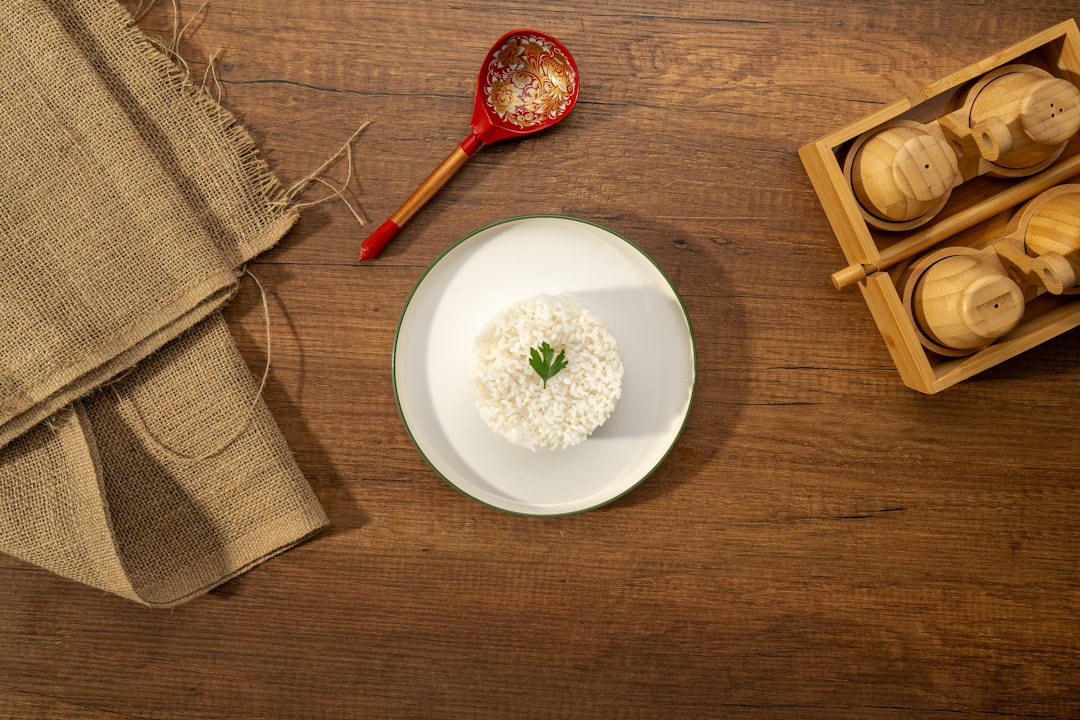
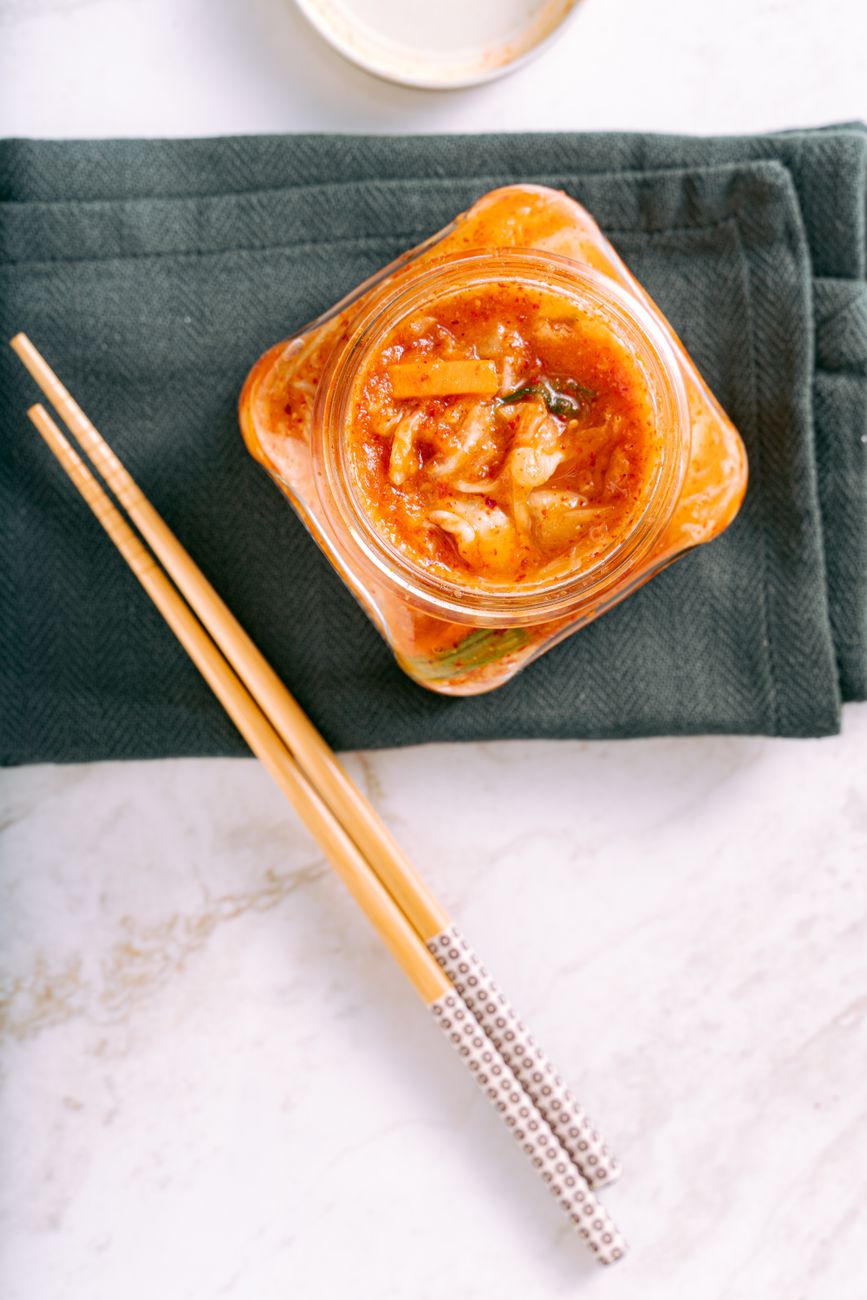
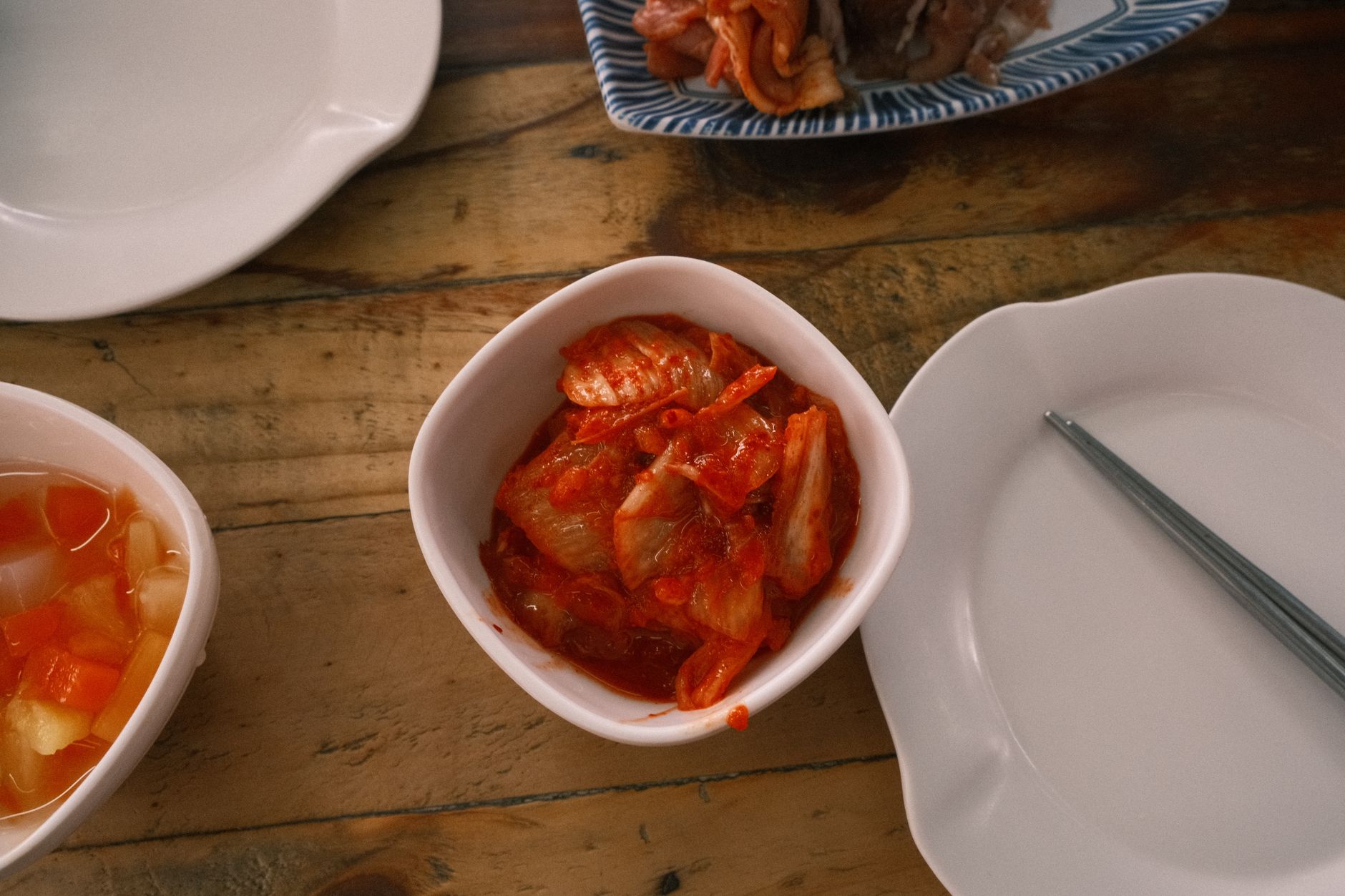
A Korean table setting isn't just "utensils." It's a little system. The pair even has its own name — sujeo (수저), which mashes together sutgarak (spoon) and jeotgarak (chopsticks). The spoon does rice and soup, and that's its whole job. The chopsticks handle banchan, the little side dishes: the seasoned spinach, the soy-braised potatoes, the kimchi.
Here's a detail my kids love, because it makes Korean chopsticks feel special: they're flat and metal, usually stainless steel — not the round wooden ones you get with takeout, and not the pointed wooden ones from a Japanese place. That's a genuinely Korean thing. It also makes them harder. Metal is slippery and heavier, so a slick piece of japchae noodle will slide right out of a beginner's grip. If your kid is struggling with metal, that's not clumsiness. The tool is legitimately tougher. We practice on metal when we're out and use lighter training pairs at home.
The part that trips kids up is that you're not supposed to hold both utensils in the same hand at the same time. To a four-year-old this looks like a missed opportunity. Why not scoop soup with one hand and stab a piece of bulgogi with the other? Efficient, right? But at a Korean table that reads as fumbling, not clever — and in front of elders it looks especially sloppy. I tell my kids to think of it like handing off a relay baton: put one down before you pick up the other. Two weeks of small reminders at dinner and it stopped being something they had to think about.
Why Chopsticks Should Never Stand Upright in Rice
This is the one I lead with now, because there's a real story behind it, and kids hold onto stories a lot better than rules.
At a jesa — a Korean memorial rite for ancestors — incense sticks get stood upright in a bowl of sand or rice, an offering for the dead. A pair of chopsticks standing straight up in rice looks exactly like that. So doing it at an ordinary dinner isn't just sloppy. It's read as an accidental echo of a funeral. That's why that hand moved so fast.
I don't make it spooky. I just tell my kids, plainly, that it means something different at a different kind of table — like how you wouldn't wear a Halloween costume to a wedding. Same object, wrong room. That framing has landed way better than "it's rude" ever did.
When it actually happens — and it will — don't make a scene. The move I saw at that table is the right one: slide it out, keep talking, no lecture in front of everybody. I save the explanation for later, in the car or at bedtime, when it's a story and not a scolding. A little kid who gets publicly corrected mid-bite just learns that dinner is scary. One who hears the incense story on the drive home actually remembers it.
How to Set the Table: Chopstick and Spoon Placement
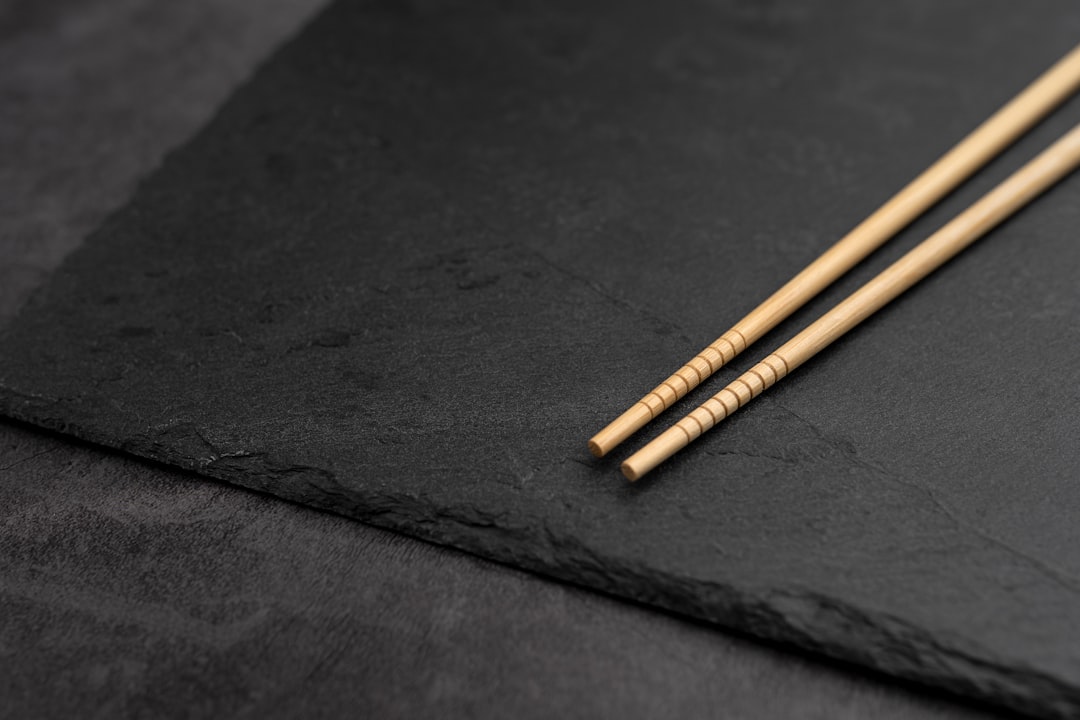
There's a small setting rule that even a lot of Korean-American kids don't know, and it's easy to get right: the spoon and chopsticks rest on the right side of the plate, with the chopsticks to the right of the spoon, both pointing the same way, side by side.
(The photo above is wooden, by the way — a Korean set would be flat steel. Close enough for the placement idea, not for the chopsticks themselves.)
Why bother teaching this to a kid? Because the mirror image of it — chopsticks laid to the left of the spoon — is specifically how a table is set for a funeral or memorial meal. Same family of taboo as the upright chopsticks: it belongs to a different, solemn kind of table. So when my daughter helps set the table for a family dinner, I show her "spoon here, chopsticks to the right of it," and that's it. She doesn't need the heavy backstory to build the habit. I keep it as simple as side by side, chopsticks on the right.
Why the Rice Bowl Stays on the Table (Not Like Japan)
This is the one that surprises my American friends the most, because it runs opposite to what a lot of people picture as "Asian table manners" in general. In Korea, you don't lift your rice or soup bowl off the table to bring it to your mouth. The bowl stays put. You bring the spoon to you.
Worth saying out loud to kids, because the internet will tell them the opposite. In Japan, lifting your rice bowl toward your mouth is completely normal and even expected. In Korea, it's not. The bowl stays down. So if your kid has seen a cartoon or a video where someone slurps straight from a lifted bowl, gently flag that it's a different country's custom, not a universal "Asian rule." Getting this one wrong is exactly the kind of thing that reads as odd at a Korean table.
My kids' instinct, especially with soup, is to tip the whole bowl up at the end and chase the last of the broth. I let it slide at home. But I've told them: at a family dinner, the bowl does not leave the table. Full stop.
The "Wait for the Oldest Person" Rule — and Why We Don't Enforce It Every Night
Traditionally the eldest person at the table picks up their spoon or chopsticks first, and everybody else — kids included — waits a beat before starting. I grew up with a stronger version too: you were also supposed to more or less finish around when the eldest did, not linger over your plate after they'd put their spoon down.
Honestly? I don't hold my kids to that second part on a random Tuesday. It's not realistic with young kids who eat at their own speed, and plenty of Korean families don't enforce it strictly anymore either. Where I do keep it alive is the bigger meals — holidays, extended family, anywhere there's an elder at the head of the table — where I'll lean over and quietly tell them to wait. It's less about the rule and more about teaching them to read a room, to notice who they're sitting with. Korean holiday and Chuseok traditions for families
What Age Do Kids Learn Chopsticks? The Real Timeline
For years I had this low hum of guilt watching my kids eat with a fork while every other kid at the table worked chopsticks like it was nothing. Then I actually looked into it instead of just quietly comparing.
There's no hard age by which a Korean kid is "supposed" to have metal chopsticks down. Many kids start playing with chopsticks around 2 to 4 years old, usually with training pairs, but "playing with" and "mastering" are miles apart. Plenty of families lean on a fork or on training chopsticks with the little finger loop well past preschool, because the fine motor control genuinely takes time. It's a different, harder skill than a fork, especially on slippery metal.
Here's roughly how it's gone in our house, and it lines up with what I've seen in other families:
- Around 2–3: curiosity stage. They want to hold the chopsticks because everyone else does. Hand them a training pair, let them "help," expect zero actual eating. A spoon and fork do the real work.
- Around 4–5: training chopsticks click for bigger, grippable food — a chunk of tofu, a dumpling, a piece of egg. Noodles and rice are still a mess, and that's normal.
- Around 6–8: many kids can use regular chopsticks for most foods, though slippery stuff and rice come last. Metal is still the boss level.
Those are ranges, not deadlines. Some kids are early, some are late. Left-handed eating used to be discouraged in Korea, but that rule has mostly faded — though I'd say plainly that a few older relatives may still notice it, which is the same read-the-room thing as everything else here. My take: let a lefty kid use their left hand. If a child has motor challenges or a disability that makes chopsticks impractical, a fork or an adaptive utensil is completely okay. The point of the meal is being at the table together, not passing a dexterity test.
Are Training Chopsticks Worth It? (Yes, With One Caveat)
Since I get asked this: yes, we keep a set of training chopsticks — the connected kind with the little finger loops that hold the two sticks together and cradle where the fingers go — in the kitchen drawer, and they earned their spot.
They're cheap and easy to find here. H Mart carries them, Amazon has a hundred versions, and any Korean market near you probably stocks kid sets. A few honest notes from using them:
- They build the right hand shape, which is the hard part. The loops park the fingers where they belong so a kid can focus on the open-and-close motion.
- The caveat: the loop can become a crutch. At some point you want to graduate to plain chopsticks, or the muscle memory doesn't fully transfer. I let my kids drift off them when they're ready rather than forcing it.
- Metal vs. plastic: most training pairs are plastic, which is lighter and easier. Real Korean chopsticks are metal and slippery, so treat training sets as a bridge, not the finish line.
Some nights my kids ask for a fork instead. That's fine. I stopped treating any of it as a test they were flunking.
Surviving an Actual Restaurant or Big Family Dinner
Home is easy — you can let things slide. A crowded Korean BBQ place or a holiday spread with the whole extended family is where the nerves kick in. What actually helps me:
- Pre-brief in the car, using that one-minute list up top. Two rules, not ten. Usually just "keep the bowl down, and don't stand your chopsticks up."
- Bring or ask for a fork for the youngest without apologizing. Every Korean restaurant I've been to in Queens has forks, and no server has ever blinked. A kid eating happily with a fork beats a kid melting down over chopsticks.
- On shared banchan, teach "eat what you touch." The side dishes are communal, so we don't dig around and put pieces back. Pick the piece you're taking, take it, done. This one clicks fast because kids get "no double-dipping" from other contexts.
- Let the small stuff go in public. I correct the two big things (upright chopsticks, lifting the bowl) and quietly ignore the rest until we're home. Nobody remembers a wobbly grip. They remember a tense table.
For now, our table runs on the spoon, the chopsticks, the bowl that doesn't leave the table, and a fork when someone needs it. Most nights, that's already plenty to keep track of.
Pouring for Elders Comes Later, and That's on Purpose
One more piece I've mentioned to my kids but haven't pushed: when you're old enough to help pour drinks at a family gathering, you pour for the elders first, and when someone pours for you, you take the cup or glass with both hands, not one.
It's a real part of the etiquette. But it's squarely an adult-and-older-kid thing. Little kids are off the hook, and nobody expects a seven-year-old to be topping off water glasses with two hands. I've told my kids it's coming, the way you'd tell a kid they'll get a later bedtime one of these years.
Frequently Asked Questions
At what age do Korean kids start using chopsticks?
Many start around 2 to 4 years old, usually with training chopsticks, but starting isn't the same as mastering. Regular (especially metal) chopsticks often aren't comfortable until 6 to 8, and that's completely normal. There's no official deadline — kids develop the fine motor skill at their own pace, and forks in the meantime are fine.
Why do Koreans think it's bad luck to stick chopsticks upright in rice?
Because it visually mirrors the incense sticks planted in a bowl of sand or rice during a jesa, a memorial rite for deceased ancestors. Standing chopsticks in rice at a regular meal reads as an unintentional funeral reference, which is why it draws such a fast, instinctive correction from older relatives.
Is it rude for kids to use a fork at a Korean meal?
No. Forks are widely available and used, especially for young children, and no one reasonable expects a toddler to manage slippery metal chopsticks. The etiquette that actually matters — not standing chopsticks in rice, keeping the bowl on the table, waiting for the eldest — applies whether a kid is holding chopsticks or a fork.
Are training chopsticks worth buying for a toddler?
For most kids, yes. The connected pairs with finger loops teach the correct hand shape, which is the hardest part, and they're cheap and easy to find at H Mart or on Amazon. The one caveat: the loop can become a crutch, so plan to graduate to plain chopsticks eventually rather than relying on the trainer forever.
Why don't Koreans lift the rice bowl the way people do in Japan?
It comes down to differing customs, not a universal "Asian" standard. In Korean etiquette the bowl stays on the table and the spoon travels to you, while in Japan lifting the rice bowl toward your mouth is normal and expected. It's a genuine cross-cultural difference worth teaching kids so they don't assume all East Asian tables follow the same rules.
If your kids are just starting to figure out the spoon-and-chopstick dance, hang in there. Ours took longer to click than I expected, and it came together one dinner at a time, not from any single conversation. A fork tonight doesn't mean a fork forever.
Heading to a bigger spread soon? Our walks through exactly what to expect — and how to prep the kids — before you sit down at the grill.