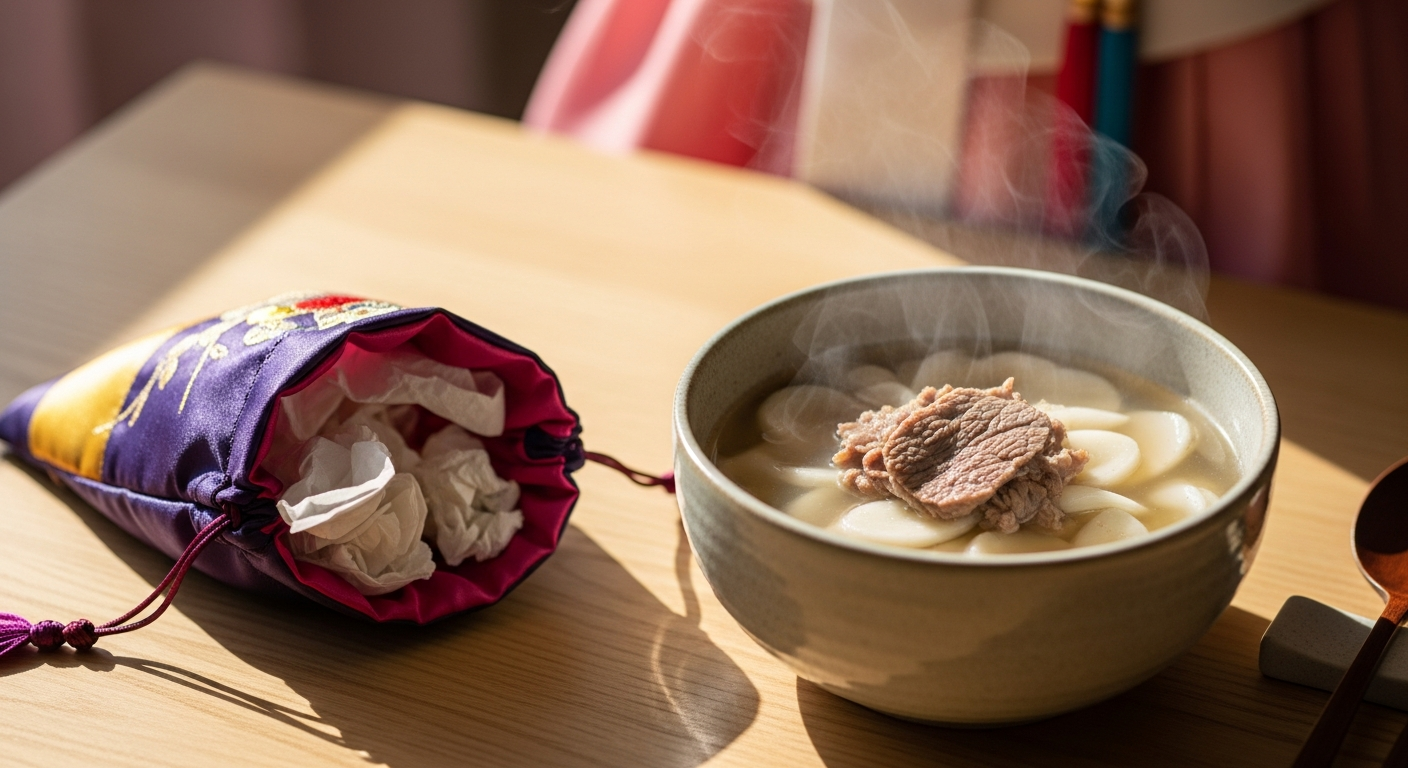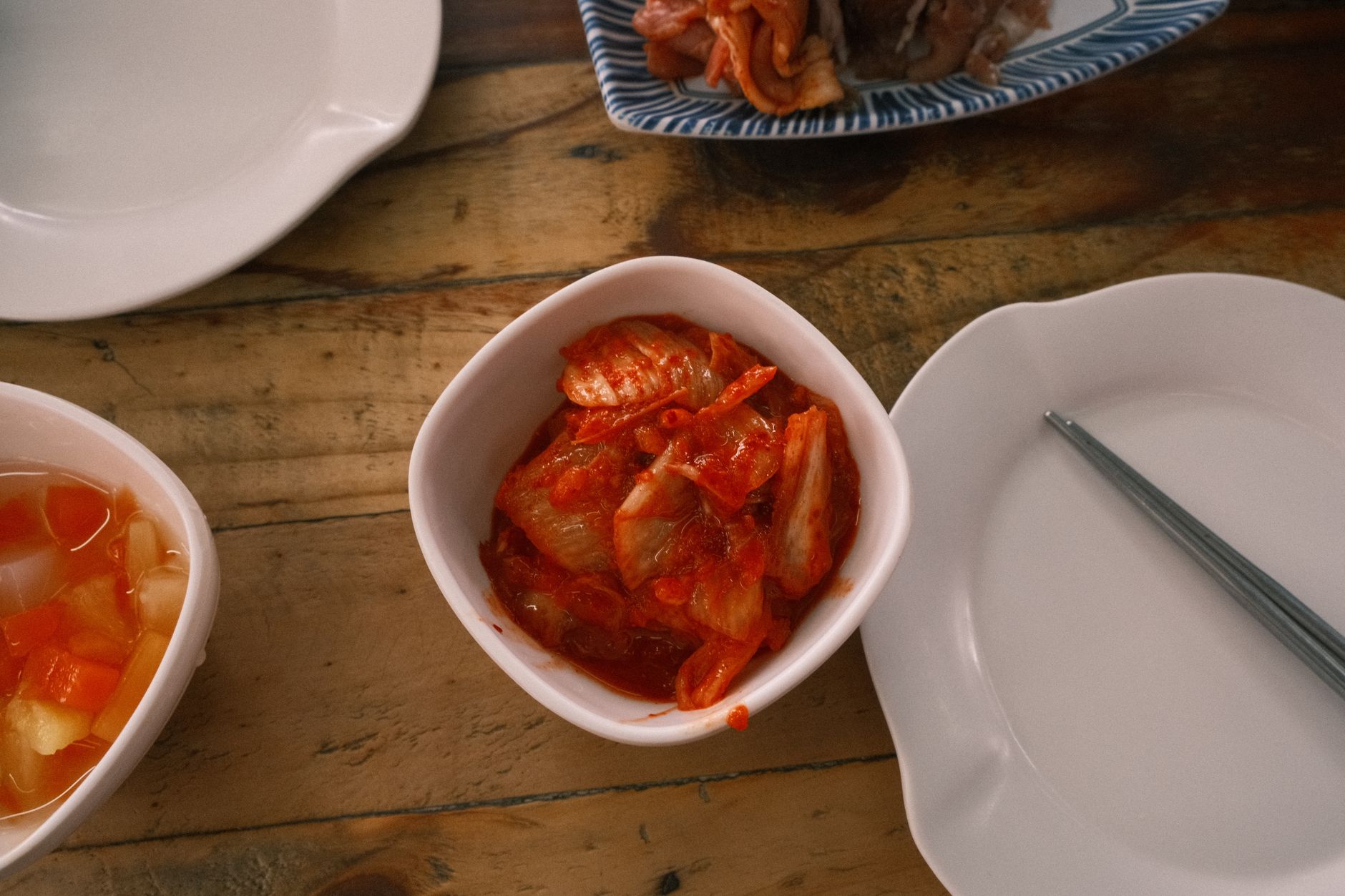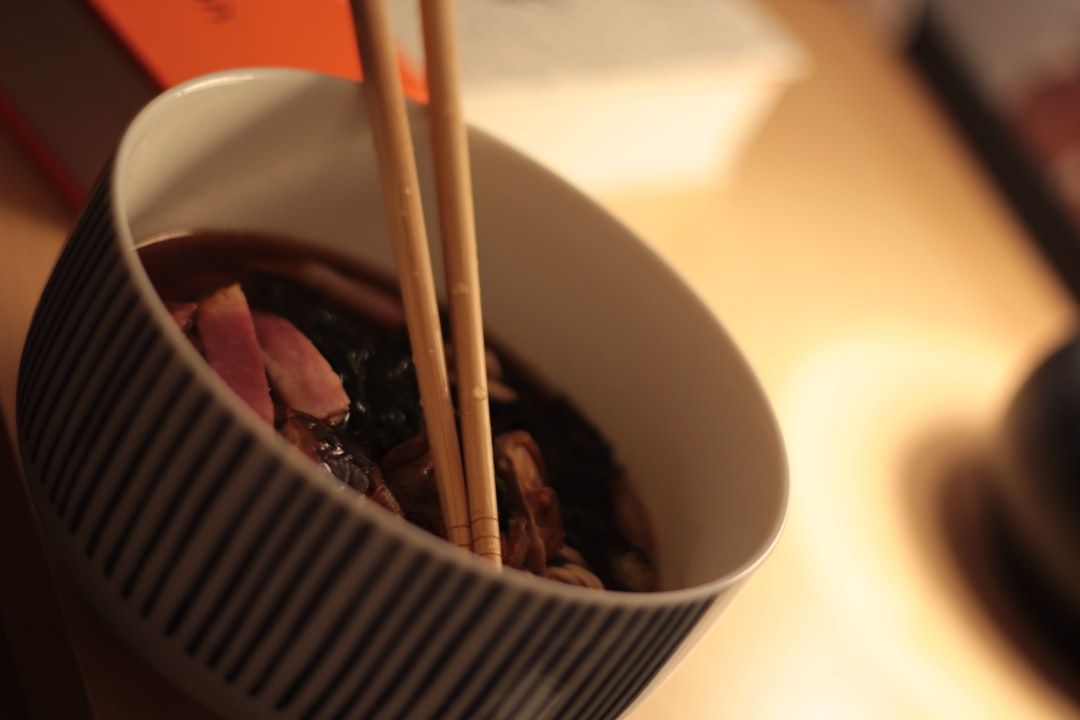
My kids know the sound before they know the word for it. That specific slurp-and-clack of black bean noodles twirling around chopsticks on screen, right before somebody in the drama folds face-down onto a restaurant table because their day was just that bad. Half the emotional climaxes in Korean dramas happen over a bowl of noodles. And every single time, one of my kids turns to me and asks the same thing: “Can we get that?”
Good news is, most of it, you actually can. Not the studio-lit, soft-focus version. A real weeknight one, made from stuff at a normal US grocery store air fryer Korean recipes with grocery-store ingredients . Here's what's actually behind the most famous K-drama food moments, and how I make them in a cramped Queens kitchen without a special trip anywhere.
Short answer: The K-drama foods worth cooking at home are the instant ones — jjajangmyeon (use Chapagetti), jjapaguri (Chapagetti + Neoguri, the real name behind “ram-don”), ramyeon with egg and cheese, budae-jjigae, sundubu-jjigae, tteokbokki, and pajeon. Most take 10 to 30 minutes, and every ingredient is at H Mart, Walmart, or Amazon.
What's Actually Easy to Cook — Sorted by How Hard It Is
I made this list after years of promising my kids something from a show and then realizing at 6pm that it needed a 3-hour broth. Start at the top.
| Dish | Time | Difficulty | Hardest part |
|---|---|---|---|
| Ramyeon + egg + cheese | 6 min | Beginner | Not overcooking the noodles |
| Chapagetti (jjajangmyeon stand-in) | 8 min | Beginner | Stir the packet off the heat |
| Jjapaguri (“ram-don”) | 15 min | Beginner | Draining the water right |
| Dalgona candy | 10 min | Beginner-ish | Sugar burns in seconds |
| Tteokbokki | 20 min | Easy | Finding rice cakes |
| Sundubu-jjigae | 25 min | Easy | Opening the tofu tube neatly |
| Pajeon | 25 min | Medium | Getting it crisp, not floppy |
| Budae-jjigae | 30 min | Medium | Sourcing 6 things at once |
Nothing on this list needs a skill you don't already have. It needs the right shortcut.
Jjajangmyeon Isn't “Fancy Date Food.” It's Delivery Night.
Watch more than two or three K-dramas and you've seen it. Someone orders jjajangmyeon (짜장면, also standard as 자장면) after a breakup, after a brutal shift, after moving into a new apartment with boxes still stacked in the corner. If you've only ever seen it written 자장면, that's the older official spelling. 짜장면 is what almost every Korean-Chinese restaurant actually puts on the menu, and the National Language Deliberation Council finally made it a standard spelling too, back on August 31, 2011. Wheat noodles tossed in a thick, almost-black sauce built from chunjang, a dark fermented soybean paste that gets sold in English as black bean paste, usually with diced pork, onion, and potato or zucchini cooked in.
Let me clear something up, because I've watched this dish get romanticized online into some kind of special couple's meal. It's not. In Korea, jjajangmyeon is what you order when you can't face the stove. It's the Friday-night pizza equivalent, the thing that arrives on the back of a scooter in twenty minutes. It shows up in dramas because it's mundane. It's the food of ordinary, tired, real days, and that's exactly why writers reach for it. Everyone watching already knows what that bowl means. Nobody has to explain it.
That's the part I miss most, honestly. In Seoul I could get a bowl at 11pm for less than a coffee costs here. In Bayside, my version arrives from my own stove in eight minutes, and I've made peace with that.
Chapagetti Is the Real Stand-In, and It's Already at Your Walmart
You are not going to make fermented paste from scratch on a Tuesday, and you don't need to. The instant version, Chapagetti by Nongshim, is a genuinely close stand-in. It's not hiding in some specialty aisle either. I've grabbed it at Walmart, and it turns up at Amazon, World Market, and obviously H Mart if you've got one nearby. Familiar ramen-brick format, about 4.5 ounces a pack, usually a buck or two each, sold in multi-packs.
My kids' method, which is now just my method:
- Boil the brick about 1 minute shy of the package time.
- Drain nearly all the water, but leave about 2 tablespoons in the pot.
- Stir in the black bean powder and the oil packet off the heat. The first time I did it over a live burner it seized into gluey clumps in about ten seconds. Off the heat, every time.
- Top with whatever's in the fridge. A fried egg, sliced scallion, shredded rotisserie chicken if there's a carcass sitting around.
It's not the restaurant bowl. It's close enough that my kids stopped asking why it doesn't look like the drama.
“Ram-Don” Doesn't Exist in Korean. Here's the Real Dish.
This is the one that trips up basically every American friend who's asked me about it. In Parasite (2019) there's a scene where a character gets told to make “ram-don” for a wealthy family. It got a lot of attention. There were think-pieces about this mysterious noodle dish. Except there is no such dish in Korea. “Ram-don” was invented for the English subtitles, a mash-up of “ramen” and “udon” to give English speakers a fast sense of what's being combined.
The real name is jjapaguri (짜파구리): Chapagetti plus Neoguri, Nongshim's spicy, chewier, udon-style instant noodle with dried kelp in the packet. Koreans have been mixing these two at home since around 2013, when the combo took off on Korean TV. It's a known instant-noodle hack, years older than the movie.
What the film added was the topping. The housekeeper stirs in seared Hanwoo, premium Korean beef, not a generic “steak.” That detail matters, because Hanwoo is famously expensive, and a rich family eating it over everyday hack noodles is part of the class commentary the whole movie runs on. When people call it “ram-don” and stop there, they miss the joke the scene is actually making.
How to Actually Make Jjapaguri at Home
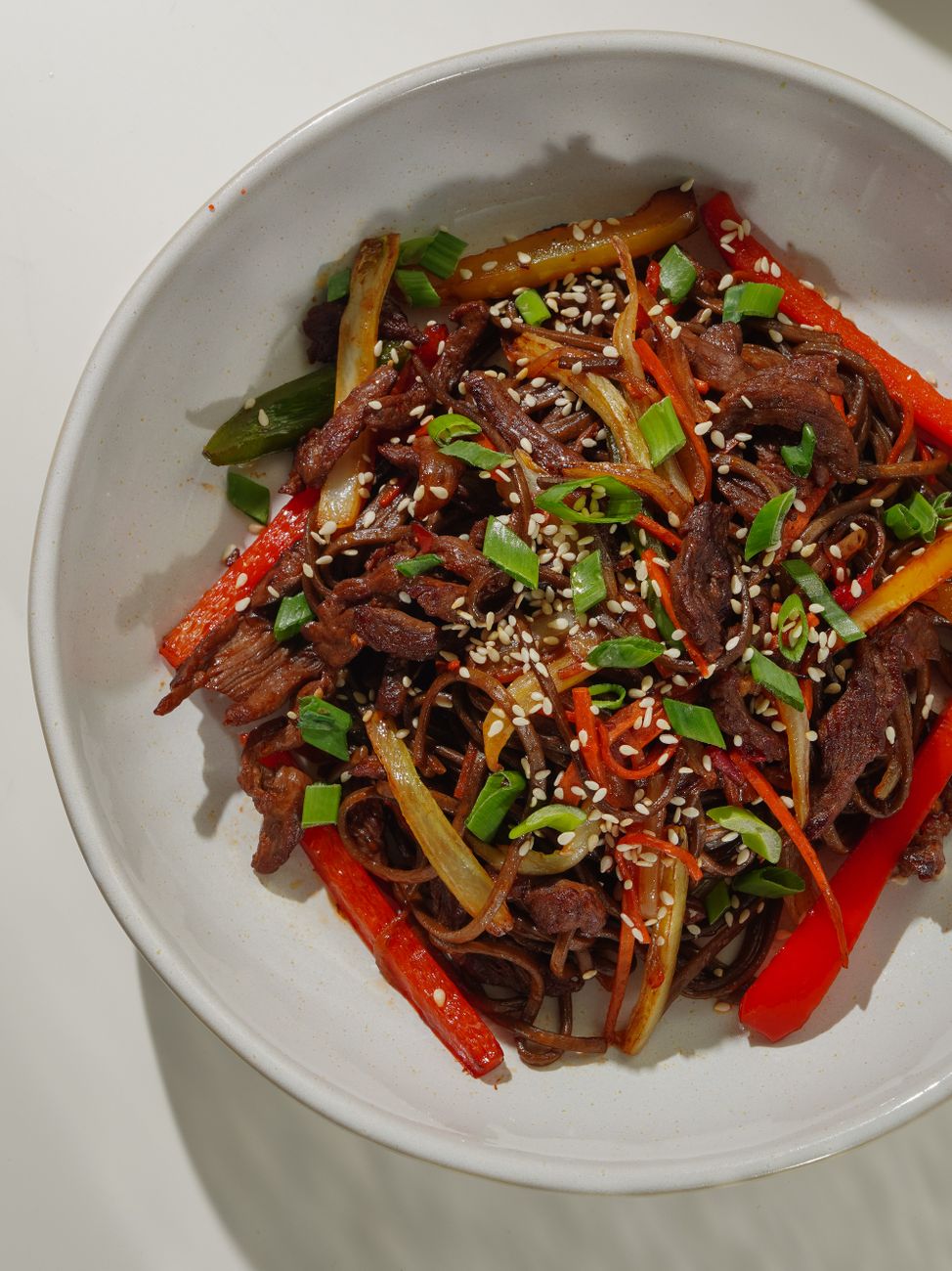
This is the one my kids request most, probably because it comes with a movie attached. Serves 2 adults, or 2 kids plus me picking at the pot. Here's my version:
- Boil 1 Chapagetti brick + 1 Neoguri brick together in about 4 cups of water, which is less than the two packages would call for on their own, since you're draining most of it anyway.
- Cook about 1 minute under the shorter package's time. The noodles keep softening after you drain, and overcooked jjapaguri turns gummy on you.
- Drain almost all the water. Keep roughly 1/4 cup to help the sauce cling.
- Off the heat, stir in the full Chapagetti seasoning and about half the Neoguri packet. Adjust from there. The Neoguri packet brings real heat, so I go easy the first round for my youngest, then shake more in for myself.
- In a hot skillet, sear about 8 oz cubed sirloin, salt and pepper only, roughly 2 minutes a side so the middle stays pink. Real Hanwoo isn't something I've ever found at a regular US grocery store, so I use sirloin and don't lose sleep over it. The technique matters more than the breed of the cow.
- Pile the sliced steak on top and scrape in the resting juices.
My kids could not care less about the Hanwoo history. They care that it tastes like a spicier, chewier jjajangmyeon with fancy steak on top. Which, honestly, is the appeal for the grown-ups too.
Ramyeon With an Egg and a Slice of Cheese
Ramyeon (라면) is just the Korean word for instant noodles. Not a dish, not a brand. It carries whole scenes anyway, and it works on screen because a pot of ramyeon shared between two people means something in Korea that a can of soup doesn't here. Inviting someone in for ramyeon at midnight is never really about the noodles. Everybody watching knows that.
Two upgrades that take zero extra time:
- The egg. Crack it in during the last 60 seconds and don't stir. Lid on. You get a soft, custardy yolk instead of egg-drop shreds.
- The cheese. One slice of American cheese, laid on top after you kill the heat. It goes silky and takes a real bite out of the heat. That's not folk wisdom, either. The casein in dairy grabs onto capsaicin and lifts it off your tongue, which is why milk works and water doesn't. Cheese in ramyeon has its own Korean history too. It got added on the military bases, where it was there for the nutrition, and it stuck around because it tastes good. It's the single reason my kids will eat spicy ramyeon at all.
Do both, cut the water by about 1/2 cup, and pull the noodles a minute early. That's it. That's the hack the whole internet keeps rediscovering.
Budae-Jjigae: The Stew With a History Worth Knowing
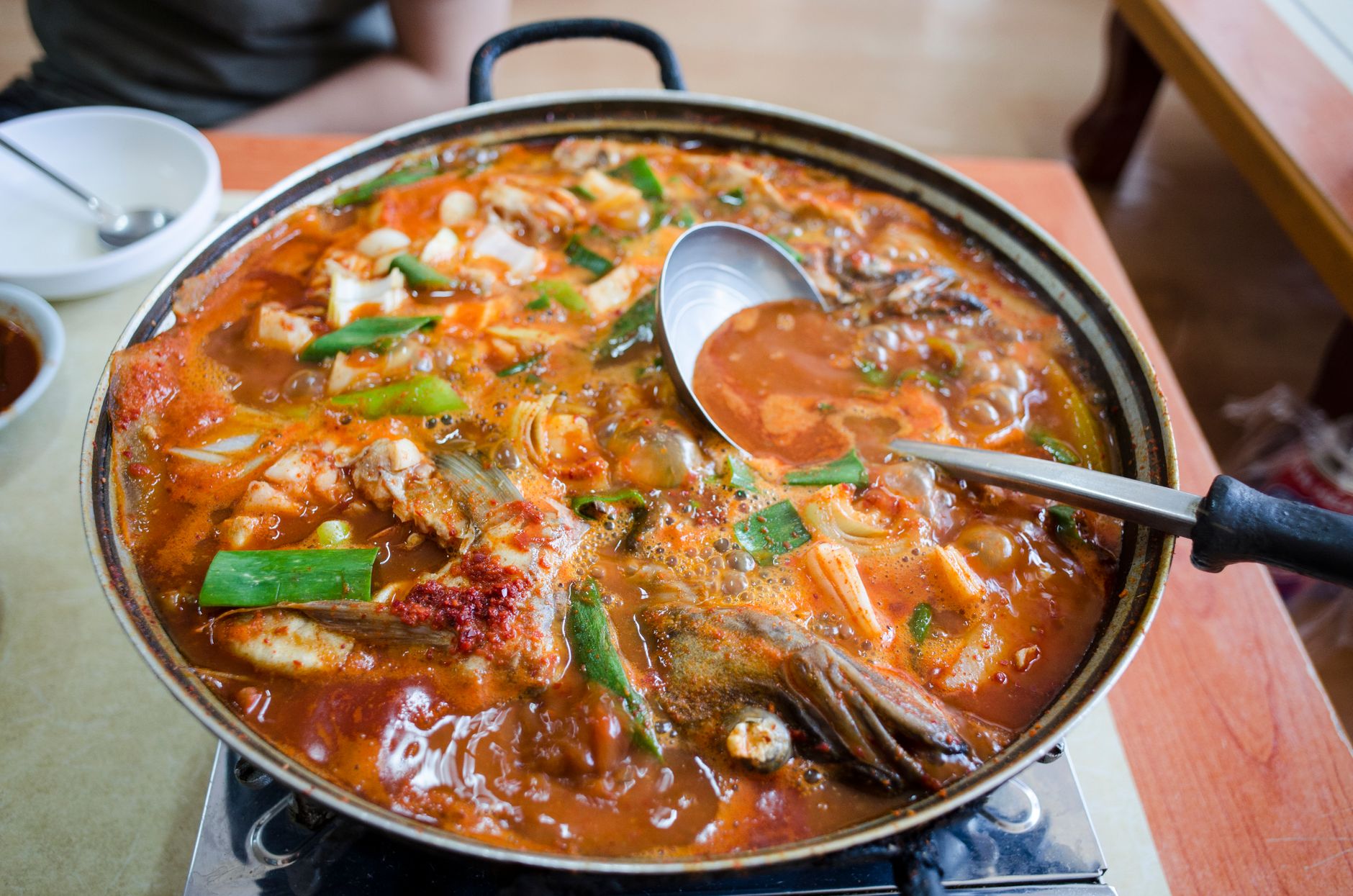
Budae-jjigae turns up all over Korean TV as a fun, bubbling, communal hot pot. “Budae” means military unit, so the name lands as “army base stew.” It's one of my kids' favorite family dinners teaching kids Korean table manners with chopsticks for a simple reason: everybody throws their own toppings into the shared pot.
But I don't hand it to my kids as a quirky, cheesy novelty, because it isn't one. Budae-jjigae came out of the years after the Korean War in the 1950s, when Korean cooks stretched whatever surplus American food came off the US military bases, Spam and hot dogs and canned beans, into something that could feed a family through real scarcity. It's a stew born out of a hard chapter, dressed up now as comfort food.
I tell my kids the short version every time we make it. Not to weigh dinner down. I just don't think a food this beloved should get flattened into “isn't this fun and weird” without one sentence of where it came from.
My home version (feeds 4, one wide shallow pot):
- Layer in the pot: 6 slices Spam, 2 hot dogs sliced on the diagonal, 1 cup chopped kimchi how to store kimchi so it doesn't take over the fridge , half an onion sliced, half a block of firm tofu in slabs.
- Pour over 4 cups anchovy stock, or water plus a couple of the dried anchovy stock packets from H Mart.
- Stir a sauce into the broth: 1 tbsp gochujang, 1 tbsp gochugaru, 3 cloves minced garlic, and about half a ramyeon seasoning packet.
- Simmer 10 minutes. Add 1 brick of ramyeon noodles and cook 3 more.
- Kill the heat, drape 1 slice of American cheese on top, let it melt down, and let everyone ladle their own bowl.
The older kimchi is, the better this gets. Sour, fizzy, month-old kimchi is the whole point. It's the one dish where the jar you were about to give up on is exactly right.
Sundubu-Jjigae: The 25-Minute Stew That Looks Like It Took Hours
If budae-jjigae is a project, sundubu-jjigae (순두부찌개) is the weeknight one. Silken tofu, a red gochugaru broth, an egg cracked in at the end. It hits the table bubbling so hard it looks like restaurant food, and it's honestly one of the easiest things I make. It's also the stew at the emotional center of Itaewon Class, the late father's recipe that keeps coming back in episodes 5, 7, and again in the finale. Which tells you something about what this bowl means to people.
The tofu comes in a plastic tube at H Mart, and you don't cube it. Snip the tube and squeeze it straight into the pot in big soft chunks. It breaks apart on its own.
- Sizzle 1 tbsp gochugaru in 1 tbsp sesame oil for 30 seconds. Low heat. It burns fast and turns bitter.
- Add 2 cloves garlic, half a cup of chopped kimchi, and any protein: a handful of shrimp, some sliced pork, or nothing at all.
- Pour in 1.5 cups anchovy stock or water, simmer 5 minutes.
- Squeeze in one tube (about 11 oz) of soft tofu. Simmer 5 more.
- Crack an egg right into the middle and serve immediately. Don't stir it. That's the shot you've seen on screen.
One honest note on gochugaru: it isn't interchangeable with generic crushed red pepper or cayenne. It's fruitier, smokier, and much less sharp, and swapping 1:1 will give you a stew that's just hot, missing the flavor. A $6 bag from H Mart or Amazon lasts me months in the freezer. It's the one ingredient I'd tell you not to substitute.
Tteokbokki, Pajeon, and Spam Fried Rice — the Everyday Three
These three are all over the dramas and all easy.
Tteokbokki (Spicy Rice Cakes)
Simmer 1 lb rice cakes (frozen or refrigerated, H Mart or the Asian aisle) in 1.5 cups water with 2 tbsp gochujang, 1 tbsp gochugaru, 1 tbsp sugar, and 1 tbsp soy sauce for about 10 minutes until the sauce goes glossy and thick. Frozen rice cakes need a 10-minute soak in warm water first or they stay chalky in the middle. Toss in fish cakes and a boiled egg if you have them. For my youngest I halve the gochujang and add an extra teaspoon of sugar. That's the street-cart version dialed down to Queens-apartment level.
Pajeon (Scallion Pancake)
The reason yours is floppy is the pan isn't hot enough and you're being shy with the oil. Use more oil than feels right, medium-high, and don't move it for 3 minutes. I use a store-bought Korean pancake mix (buchim garu) with ice-cold water. Cold batter, hot pan. That's the whole trick.
Spam Fried Rice
The one from Itaewon Class. Day-old rice, diced Spam crisped hard in a dry pan first, then kimchi, then the rice, then a fried egg on top. It's the single most-requested thing in my house and it takes 12 minutes.
Dalgona: The Squid Game Candy Kids Will Beg For
Sugar and baking soda. That's it. Melt about 2 tbsp of white sugar in a small ladle or a nonstick pan over low heat until it's amber and liquid, pull it off, stir in a pinch of baking soda so it puffs up pale and foamy, then pour it onto parchment and press it flat with the bottom of a greased cup.
No cookie cutter needed. Press the shape in with anything with a clean edge: a bottle cap, a small cookie cutter, the rim of a shot glass. Grease whatever you use or you'll never get it off.
Two warnings from experience. Molten sugar is genuinely dangerous, so my kids are on stool-watching duty from a safe distance, not stirring. And it goes from amber to burnt in about five seconds, so don't walk away. I have thrown out a lot of black pucks learning that.
If you want the sweet-and-cinnamon drink to go with it, I make a stripped-down sujeonggwa: cinnamon sticks and sliced fresh ginger simmered in water with brown sugar, strained, chilled hard, poured out cold with a few pine nuts on top. It comes in a bowl, so people assume it's soup. It's dessert. I say so out loud every time.
Chimaek Isn't a Dish. It's an Evening.
Every drama has the scene: friends on the floor around a table, a mountain of fried chicken, cold beer. Chimaek is chikin + maekju, fried chicken and beer. It's a pairing, not a recipe, which is why searching for a “chimaek recipe” gets you nowhere.
The chicken part is double-fried Korean fried chicken, and that one I've written about separately, because getting it crisp in a US apartment is its own fight with a smoke alarm.
K-Drama Food FAQ
What do they eat in K-dramas the most?
Ramyeon, jjajangmyeon, tteokbokki, and stews (kimchi jjigae, sundubu-jjigae, budae-jjigae). They repeat because they're what ordinary people in Korea actually eat on ordinary days. The writers aren't picking exotic food. They're picking food everyone watching already has feelings about.
What ramen do they eat in Squid Game and Parasite?
The famous Parasite noodles are Nongshim's Chapagetti and Neoguri mixed together: jjapaguri, subtitled as “ram-don.” Both bricks are at H Mart, most Asian grocers, Walmart, and Amazon for a couple dollars each.
Is Korean food easy to cook at home?
The everyday stuff, yes. Once you own gochujang, gochugaru, soy sauce, sesame oil, and garlic, most weeknight Korean dishes are 20 to 30 minutes in one pot. The hard things are the ones nobody makes at home in Korea either. That's what delivery is for.
Can I make dalgona candy without a mold?
Yes. Press it flat with a greased cup bottom and stamp the shape with a bottle cap or the rim of a glass. Grease anything that touches the sugar.
Do I have to use gochugaru, or can I substitute?
For anything spicy-red, use the real thing. Crushed red pepper and cayenne are sharper and hotter without the fruity, smoky depth, and the stew will taste hot but hollow. A single bag keeps for months in the freezer.
What K-Dramas Get Right, and What They Skip
Watching my kids get curious about this food because of a TV show has been one of the nicer surprises of raising them here, surrounded by American snacks and lunchboxes most of the week. The dramas nail the emotional weight. Jjajangmyeon really is comfort food. Budae-jjigae really is communal. What they leave out is the context. “Ram-don” isn't a real word. Budae-jjigae didn't start as a fun hack, it started as a resourceful answer to a hard time. Knowing both halves, the craving and the history, is what makes cooking these at home mean something, instead of just chasing whatever looked good on screen.
Start with the ramyeon and the egg tonight. It's six minutes, and it's the one that hooks everybody.
Next: if you're heading to H Mart for gochugaru anyway, here's how to keep your kimchi from taking over the fridge how to store kimchi in the fridge , including why the sour jar is the good jar.